
Definition in Simple Words
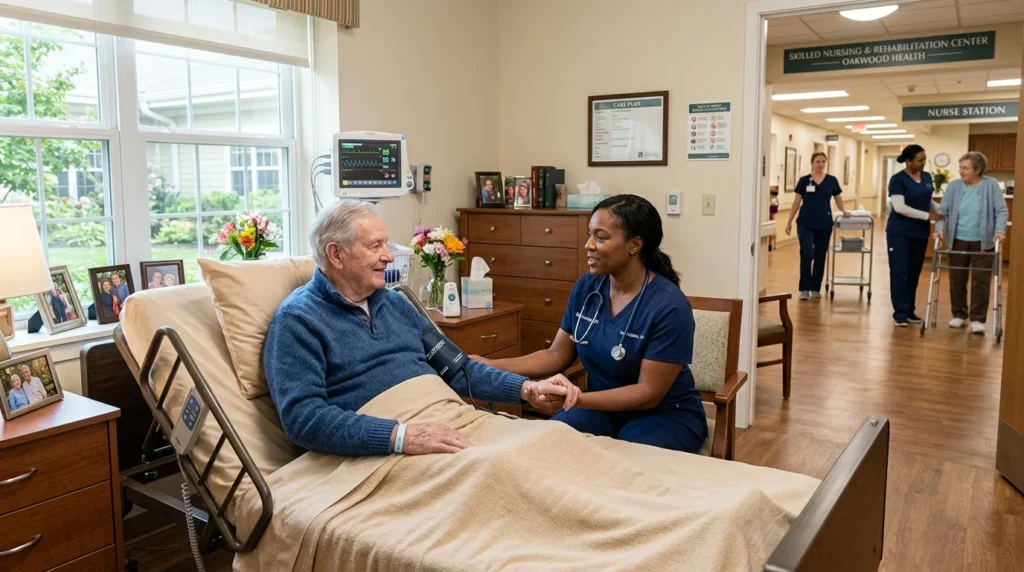
In simple English, a skilled nursing facility is a place where people can live temporarily or longer term while receiving professional nursing and rehabilitation care.
For example:
“After leaving the hospital, he went to a skilled nursing facility for rehabilitation.”
This means he moved from the hospital to a healthcare facility where nurses and therapists could help him recover.
A simple definition is:
A skilled nursing facility is a healthcare facility that provides nursing care and therapy for people who need more medical support than they can safely receive at home.
Pronunciation
Skilled nursing facility
- Skilled: /skɪld/
- Nursing: /ˈnɜːrsɪŋ/
- Facility: /fəˈsɪləti/
- Approximate pronunciation: “skild NUR-sing fuh-SIL-uh-tee”
- Part of speech: noun phrase
- Common abbreviation: SNF
Plural:
Skilled nursing facilities (SNFs)
Origin and Etymology
The phrase skilled nursing facility is a modern healthcare and administrative term.
Nursing comes from nurse, a word historically associated with caring for and nurturing people who are sick or vulnerable.
Facility comes through French from Latin roots associated with something that makes an activity possible or easy. In modern English, a facility can mean a building or institution designed for a particular purpose.
The full phrase developed as healthcare systems distinguished between different levels of care, particularly care requiring licensed nursing professionals and rehabilitation services.
In the United States, skilled nursing facility is also an important term in the Medicare and healthcare system and can have specific administrative and reimbursement implications.
Meaning in Different Contexts
Skilled Nursing Facility in Healthcare
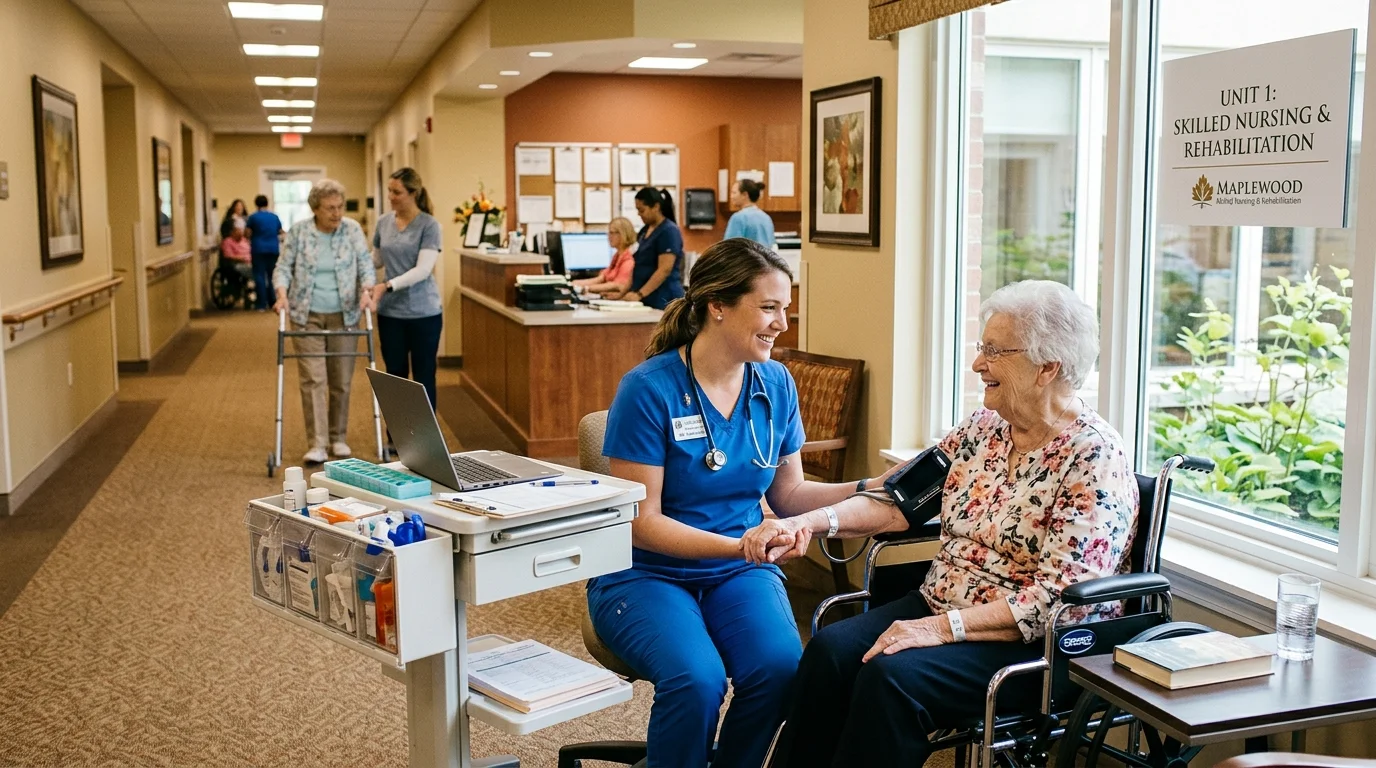
In healthcare, an SNF provides a level of care for people who require professional nursing services and/or rehabilitation.
Care may include:
- Medication management
- Wound care
- Monitoring of medical conditions
- Assistance with daily activities
- Physical therapy
- Occupational therapy
- Speech therapy
- Recovery support
- Care coordination
The services provided depend on the patient’s condition and care plan.
Skilled Nursing Facility After Hospitalization
A person may move to an SNF after leaving a hospital when they are medically stable enough to leave the hospital but still require professional care.
For example, someone recovering from surgery may need:
- Physical therapy
- Nursing monitoring
- Help walking
- Medication administration
- Assistance with daily activities
An SNF can provide these services while the person works toward greater independence.
Skilled Nursing Facility for Rehabilitation
Many SNF stays are focused on rehabilitation.
A rehabilitation plan may involve:
- Walking exercises
- Strength training
- Balance exercises
- Occupational therapy
- Speech or swallowing therapy
- Training for everyday activities
The goal is often to help the person regain abilities and return home safely when possible.
Skilled Nursing Facility for Long-Term Care
Although many people associate SNFs with short-term rehabilitation, some skilled nursing facilities also provide long-term care.
Long-term residents may need ongoing assistance because of significant medical or functional needs.
The type and amount of care can differ considerably between residents.
Skilled Nursing Facility and Medicare
In the United States, Medicare can cover certain skilled nursing facility services for eligible beneficiaries who meet specific requirements.
Coverage rules can depend on factors such as:
- The person’s medical needs
- Eligibility
- The reason for the stay
- Prior hospitalization requirements
- The type of services being provided
- The length of the stay
- Other Medicare rules
Medicare coverage should not be assumed simply because someone enters a skilled nursing facility.
Skilled Nursing Facility vs. Nursing Home
These terms are sometimes used interchangeably in everyday conversation, but they can describe different aspects of care.
A skilled nursing facility emphasizes professional nursing and medical or rehabilitation services.
A nursing home is a broader everyday term that often refers to a residential facility providing nursing care and assistance with daily living.
Some nursing homes contain or operate skilled nursing services, so the distinction can depend on the healthcare system and context.
Skilled Nursing Facility vs. Hospital
A hospital is designed for acute medical care, diagnosis, emergency treatment, surgery, and serious medical conditions.
A skilled nursing facility generally serves people who no longer require the level of acute hospital care but still need professional nursing or rehabilitation.
For example:
Hospital → stabilization and acute treatment → SNF rehabilitation → home
This is only a general example. Actual care pathways vary.
Skilled Nursing Facility vs. Assisted Living
Assisted living generally provides housing and assistance with daily activities for people who need some support but do not require the same level of skilled medical care.
An SNF provides a higher level of professional nursing and rehabilitation services.
Assisted living may focus more on:
- Housing
- Meals
- Personal care
- Medication assistance
- Social activities
An SNF may provide more intensive nursing and rehabilitation services.
Skilled Nursing Facility vs. Home Health Care
Home health care provides certain healthcare services in a person’s home.
An SNF provides care within a healthcare facility.
For someone recovering after hospitalization, either option may be appropriate depending on the person’s medical condition, mobility, support system, home environment, and care needs.
Examples
- A patient goes to an SNF after hip surgery for rehabilitation.
- A person receives physical therapy at a skilled nursing facility.
- A patient needs professional wound care after hospitalization.
- An older adult requires ongoing nursing monitoring.
- A person recovering from a stroke receives rehabilitation services.
- A patient needs help managing several medications after discharge.
- Someone who is medically stable but cannot safely return home enters an SNF.
- A therapist helps a resident regain walking ability.
- A patient receives occupational therapy to improve daily activities.
- A person receives speech therapy after a neurological illness.
- Nurses monitor a patient’s condition during recovery.
- A resident receives assistance with personal care while recovering.
- A person moves from a hospital to an SNF for continued rehabilitation.
- A patient works with physical and occupational therapists before returning home.
- A skilled nursing team coordinates care with the patient’s doctor.
- A resident receives ongoing nursing services for complex medical needs.
- A family discusses discharge planning with the SNF care team.
- A patient transitions home after completing rehabilitation.
- A person receives short-term skilled nursing services following an operation.
- A healthcare team evaluates whether a patient can safely return home.
Example Sentences
- She was transferred to a skilled nursing facility after leaving the hospital.
- The patient needed rehabilitation at a skilled nursing facility.
- His doctor recommended an SNF for continued nursing care.
- The skilled nursing facility provided physical therapy and nursing services.
- She stayed at the facility while recovering from surgery.
- The patient received wound care at the skilled nursing facility.
- The family visited him at the skilled nursing facility.
- The rehabilitation team helped her regain mobility.
- The patient was medically stable but still needed professional nursing care.
- He entered a skilled nursing facility for short-term rehabilitation.
- The facility developed a care plan based on his medical needs.
- The therapist evaluated her ability to walk independently.
- The nursing staff monitored the patient’s condition.
- The patient hoped to return home after completing rehabilitation.
- The skilled nursing facility coordinated care with the patient’s healthcare providers.
- She needed additional therapy before returning home safely.
- The family asked about the services available at the skilled nursing facility.
- The patient’s care plan was reviewed by the medical team.
- He received occupational therapy during his stay.
- The patient was discharged from the skilled nursing facility after meeting his rehabilitation goals.
- The facility provided assistance with daily activities.
- His stay was intended to be temporary.
- The nursing team helped manage his medications.
- The patient required ongoing skilled nursing services.
- The family discussed discharge planning with the facility’s staff.
Synonyms
There is no perfect synonym for skilled nursing facility, particularly because the term can have specific healthcare and administrative meanings.
SNF
The most common abbreviation for skilled nursing facility.
Skilled Nursing Center
A similar phrase sometimes used to describe a facility providing skilled nursing services.
Skilled Nursing Home
An informal term sometimes used to refer to a nursing facility that provides skilled care.
Nursing Facility
A broader term that may refer to a facility providing nursing and residential care.
Rehabilitation Facility
A broader term that can describe a facility focused on rehabilitation, although not every rehabilitation facility is an SNF.
Post-Acute Care Facility
A broader healthcare term for facilities that provide care after an acute hospital stay.
Antonyms
There is no exact antonym for skilled nursing facility.
Depending on the intended contrast, related alternatives may include:
Independent Living
Living without regular professional care or assistance.
Home Setting
Receiving care or recovering in one’s own home rather than in a healthcare facility.
Acute Hospital Care
A different level of care designed for serious or urgent medical conditions.
Independent Care
Managing personal and healthcare needs without skilled nursing assistance.
Similar or Commonly Confused Terms
Skilled Nursing Facility vs. Nursing Home
An SNF emphasizes skilled medical and rehabilitation care.
“Nursing home” is a broader everyday term that may include both short-term and long-term residential nursing care.
Skilled Nursing Facility vs. Rehabilitation Center
A rehabilitation center may specialize in therapy and recovery.
An SNF can provide rehabilitation but also offers professional nursing care.
Skilled Nursing Facility vs. Hospital
Hospitals generally provide acute medical treatment.
SNFs generally provide post-acute nursing and rehabilitation for people who no longer require hospital-level care.
Skilled Nursing Facility vs. Assisted Living
Assisted living generally focuses on housing and help with daily activities.
SNFs provide a higher level of professional nursing and medical care.
Skilled Nursing Facility vs. Hospice
Hospice focuses on comfort and quality of life for people with a terminal illness or limited life expectancy.
An SNF can provide rehabilitation or ongoing nursing care and may also have residents receiving hospice services.
Skilled Nursing Facility vs. Home Health
Home health services are delivered in the person’s home.
SNF services are delivered within a healthcare facility.
Common Mistakes
Thinking Every Nursing Home Is an SNF
The terms can overlap in everyday usage, but skilled nursing refers specifically to professional nursing and healthcare services.
Assuming SNF Means Permanent Residence
Many SNF stays are temporary and focus on rehabilitation after hospitalization.
Assuming SNF Means Hospital
An SNF generally provides a different level of care from an acute-care hospital.
Assuming Everyone in an SNF Needs the Same Care
Residents can have very different medical, rehabilitation, and personal care needs.
Assuming Medicare Automatically Pays for SNF Care
Medicare coverage depends on eligibility and specific requirements. Entering an SNF does not automatically guarantee coverage.
Thinking Rehabilitation Is the Only Service
Many SNFs provide both rehabilitation and skilled nursing services.
Assuming a Person Must Be Elderly
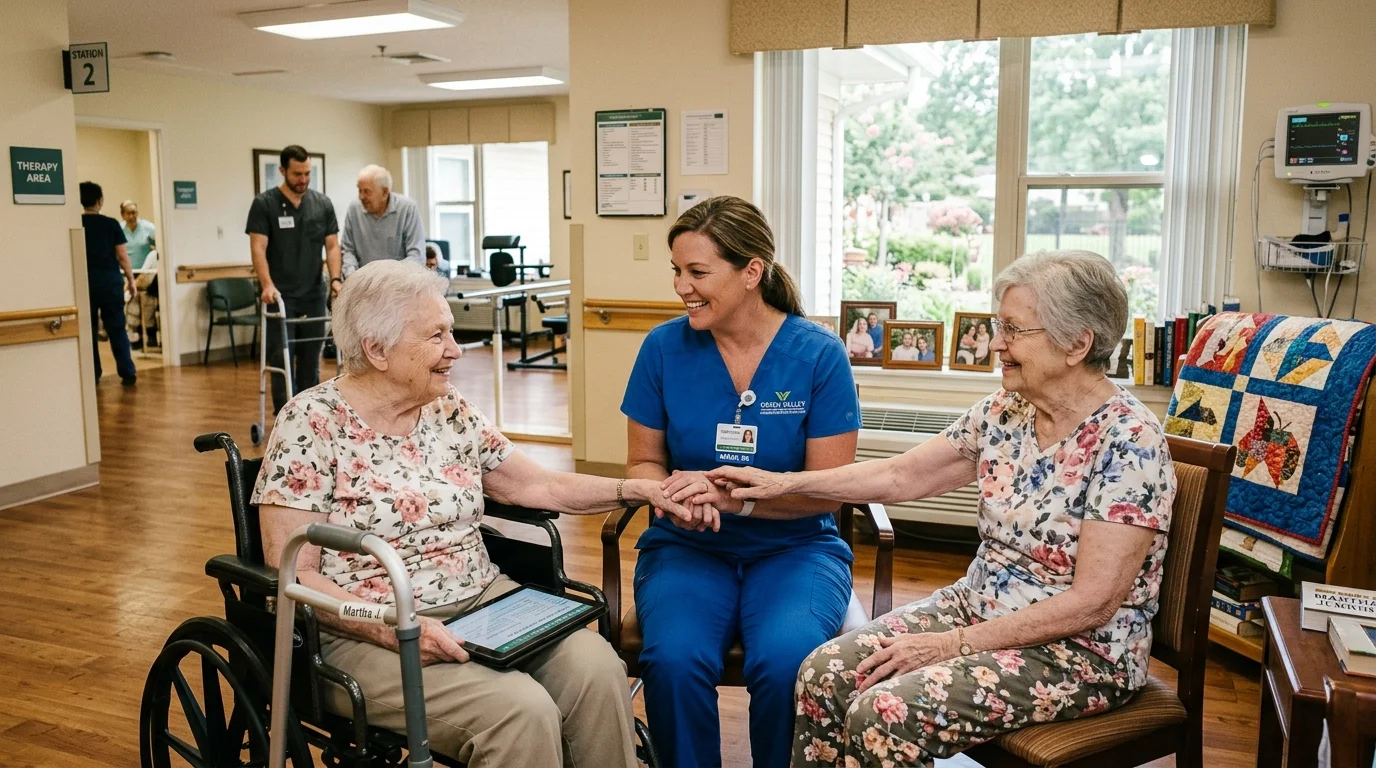
Older adults are common residents, but skilled nursing services can be provided to people of different ages when medically necessary.
When and How to Use This Term
Skilled nursing facility is a formal healthcare term.
It is commonly used in:
- Medical records
- Hospital discharge planning
- Insurance discussions
- Medicare documentation
- Rehabilitation
- Healthcare administration
- Care coordination
- Family healthcare conversations
The abbreviation SNF is common among healthcare professionals.
For general audiences, it can be helpful to explain the term the first time it appears:
“He was transferred to a skilled nursing facility (SNF) for rehabilitation.”
After that, SNF can be used as an abbreviation.
Related Expressions
Skilled Nursing Care
Professional nursing services provided by qualified healthcare personnel.
Short-Term Rehabilitation
Temporary rehabilitation intended to help someone recover function after illness, injury, or surgery.
Long-Term Care
Ongoing care for people who need continued assistance or nursing services.
Post-Acute Care
Healthcare provided after an acute hospital stay.
Physical Therapy
Therapy designed to improve movement, strength, mobility, and physical function.
Occupational Therapy
Therapy focused on helping people perform everyday activities and tasks.
Speech Therapy
Therapy addressing communication, speech, language, or swallowing difficulties.
Nursing Care
Professional care provided by nurses and other qualified healthcare staff.
Discharge Planning
The process of preparing a person to leave a healthcare facility and transition to the next appropriate setting.
Rehabilitation
A process designed to help a person regain or improve physical, cognitive, communication, or functional abilities.