
Quick Answer
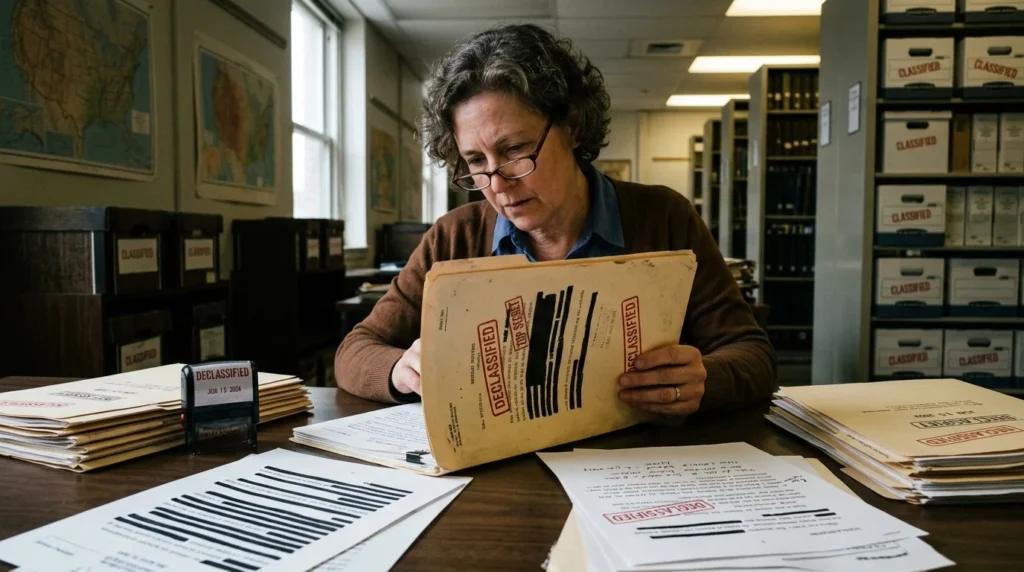
Declassified information meaning information that was previously classified and restricted by a government but has been officially removed from its classified status.
Once information is declassified, it may become available to the public, researchers, journalists, or other authorized people, depending on applicable laws and remaining restrictions.
For example:
“The government released declassified documents about the historical operation.”
This means the documents were previously classified but were later officially made available for public or authorized access.
What Does “Declassified Information” Mean?
Governments classify certain information when releasing it could potentially harm national security or other protected interests.
Common classification levels in the United States include:
- Confidential
- Secret
- Top Secret
When the government determines that information no longer needs that level of classification, it can be declassified.
Declassification does not necessarily mean every detail immediately becomes publicly available. Other laws or restrictions may still apply.
“Declassified” in Simple Words
Declassified = officially changed from classified/restricted information to information that is no longer classified.
So:
Classified information → official declassification → declassified information
What Is Classified Information?
Classified information is information that a government formally determines requires protection because unauthorized disclosure could cause harm to national security.
For example, classified material might involve:
- Intelligence activities
- Military operations
- Defense capabilities
- Intelligence sources or methods
- Sensitive national-security information
The exact rules vary by country.
How Does Information Become Declassified?
Declassification generally occurs through an official government process.
Information may be reviewed after a particular period or when authorities determine that continued classification is no longer necessary.
During review, officials may consider whether releasing the material could still reveal sensitive information.
Some records may be:
- Fully declassified
- Partially declassified
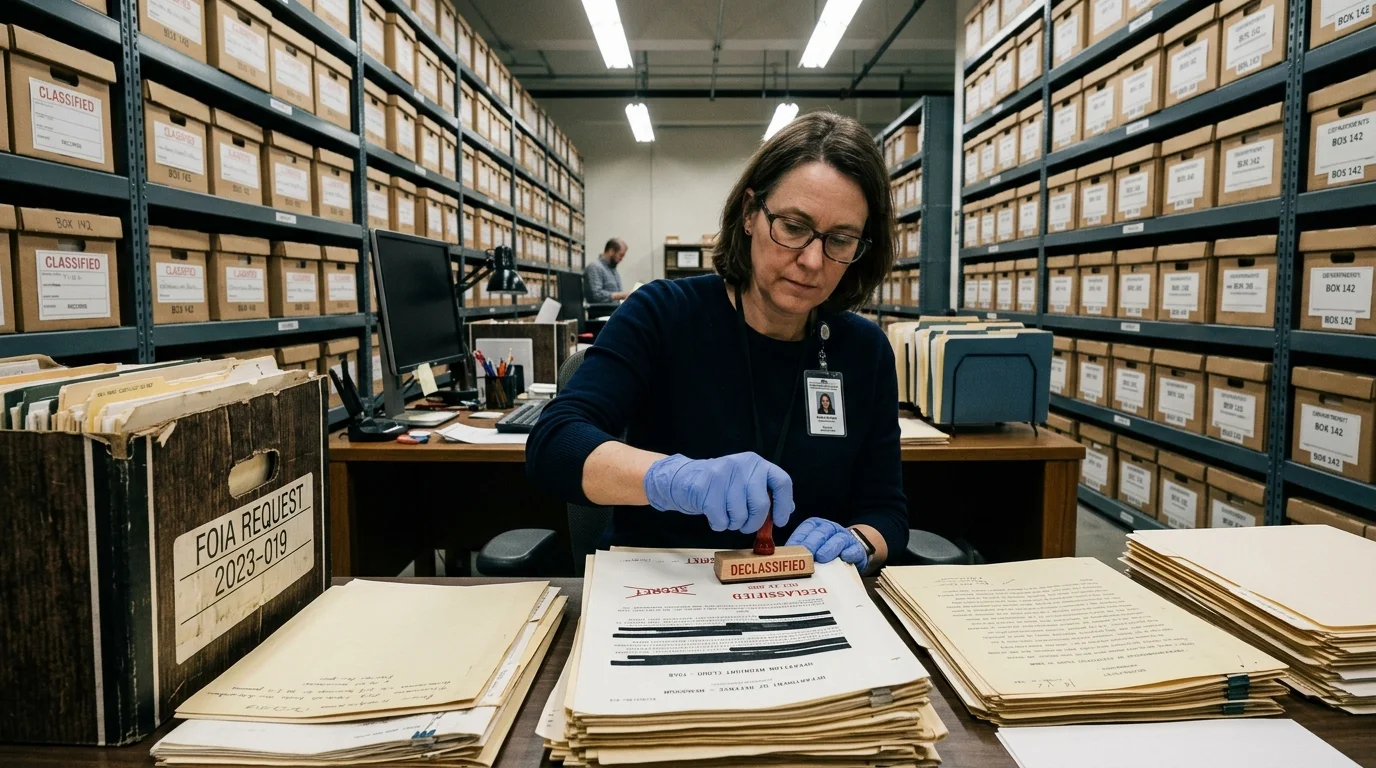
- Declassified with redactions
- Kept classified
Does Declassified Mean Public?
Not necessarily.
This is an important distinction.
Information can lose its classified status while still being subject to other legal restrictions, privacy protections, or access rules.
For example, a document might be declassified but contain information that must still be redacted before it is released publicly.
Therefore:
Declassified does not always mean completely unrestricted.
What Are Redactions?
A redaction is the removal or concealment of information from a document before it is released.
For example:
“The document was declassified, but several names remained redacted.”
This means the document was no longer classified, but certain information was still withheld.
Examples of Declassified Information
Historical Government Records
Old government records may eventually be declassified so historians and researchers can study past events.
Intelligence Documents
Some intelligence-related documents can eventually be declassified when officials determine that releasing them no longer presents a significant security risk.
Military Records
Historical military documents may be declassified and released after appropriate review.
Cold War Records
Many records concerning Cold War-era activities have been declassified over time, allowing researchers to examine historical government decisions and intelligence activities.
Declassified Information vs. Leaked Information
These terms are not the same.
Declassified information has been officially removed from classified status through a government process.
Leaked information is information disclosed without proper authorization.
For example:
A government agency officially releases a previously classified report → declassified information
Someone secretly provides a classified report to a journalist without authorization → leaked classified information
A leaked document does not automatically become declassified simply because it has been published.
Declassified vs. Classified
| Term | Meaning |
|---|---|
| Classified | Officially protected information subject to classification restrictions |
| Declassified | Information officially removed from classified status |
| Redacted | Information concealed or removed from a released document |
| Leaked | Information disclosed without authorization |
| Public information | Information generally available to the public |
These categories can sometimes overlap in complicated ways.
Why Is Information Declassified?
Governments may declassify information for several reasons.
Historical Research
Older records can become valuable to historians and researchers.
Transparency
Declassification can allow the public to understand historical government actions.
Reduced Security Risk
Information may no longer be sensitive because circumstances, technologies, or threats have changed.

Legal Requirements
Some laws or government procedures establish processes for reviewing and eventually releasing certain records.
Examples in Sentences
- “Researchers examined declassified information from the Cold War.”
- “The agency released several declassified documents.”
- “The report contains information that was once classified.”
- “Historians used declassified records to study the event.”
- “The government published previously classified material after a review.”
- “Some sections remained redacted even after the document was declassified.”
- “The declassified files provided new historical evidence.”
- “The journalist analyzed recently released declassified documents.”
Is Declassified Information Reliable?
Declassified does not automatically mean that every statement in the material is true or complete.
A declassified document is an official record that has been released from classification restrictions, but it may contain:
- Intelligence assessments
- Unverified reports
- Opinions
- Predictions
- Errors
- Information that was later disproved
Researchers therefore evaluate declassified documents alongside other evidence and historical sources.