
Definition in Simple Words
In simple English:
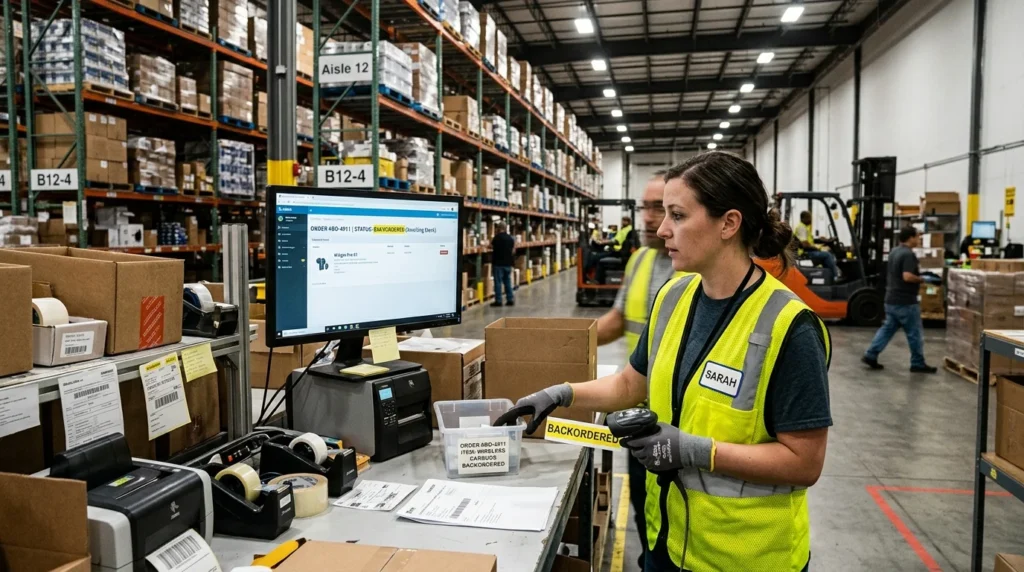
Backorder means the store does not have the product right now, but it expects to get more and send it to you later.
For example:
“Your order is on backorder.”
This usually means:
“We received your order, but we don’t have the item available yet. We will ship it when new stock arrives.”
A backorder is therefore different from an ordinary canceled order.
Pronunciation
Backorder
- Pronunciation: /ˈbækˌɔːrdər/
- Approximate pronunciation: “BACK-or-der”
- Part of speech: noun or verb
- Related term: backordered
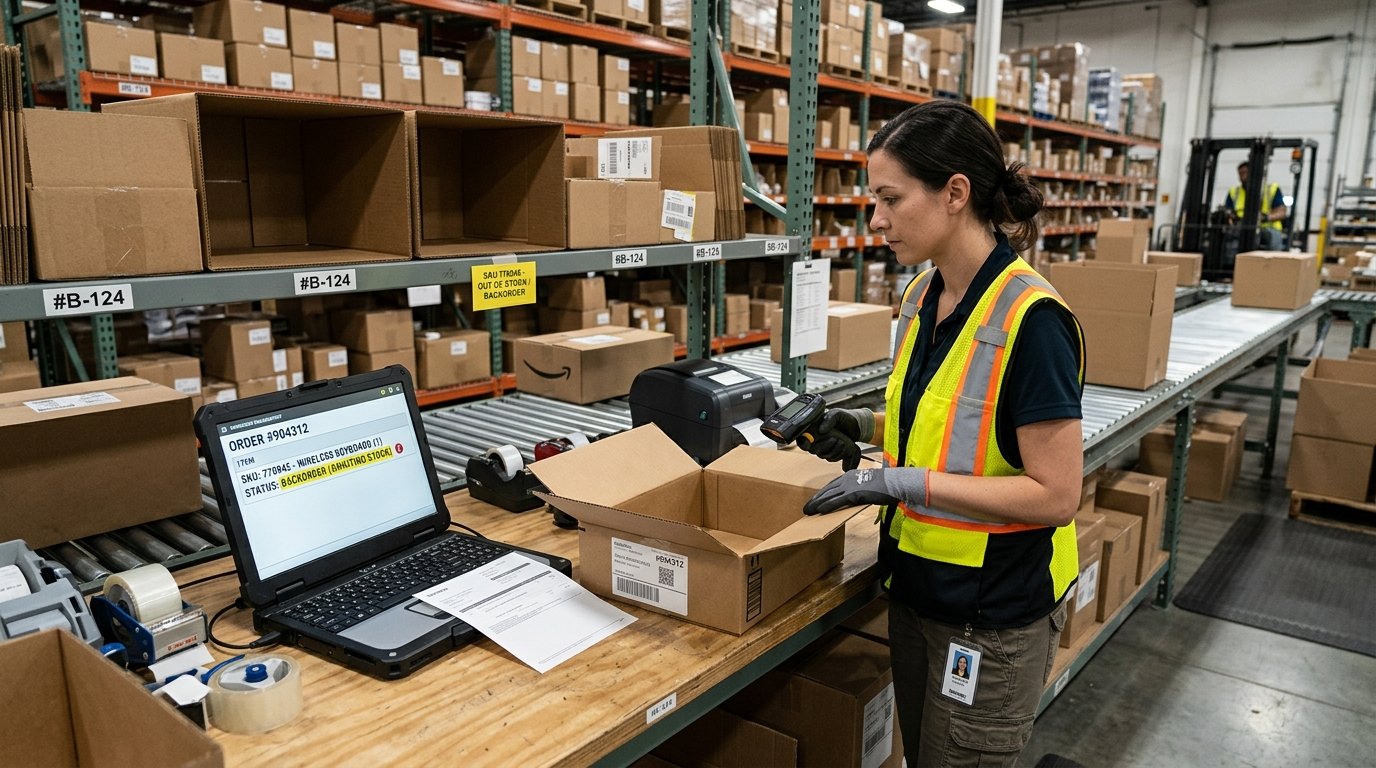
Backorder status is a noun phrase used to describe the current inventory or fulfillment condition of an order.
Origin and Etymology
The term backorder comes from the combination of back and order.
In business and inventory management, an order is considered “back” or pending when it cannot immediately be fulfilled because the required product is unavailable.
The term became increasingly common as businesses developed formal inventory systems for tracking customer orders that could not be shipped immediately.
Today, backorder is widely used in:
- Retail
- E-commerce
- Manufacturing
- Wholesale
- Supply-chain management
- Inventory management
Meaning in Different Contexts
Backorder Status in Online Shopping
In online shopping, backorder status usually means the retailer has accepted your order but cannot ship it immediately because the product is temporarily unavailable.
The order may remain active until inventory becomes available.
For example:
“Item status: Backordered.”
This usually means you should expect a delay.
Backorder Status in Retail
A physical store may use backorder status when customers request an item that is currently unavailable.
The store may place an order with its supplier and fulfill the customer’s order once the product arrives.
Backorder Status in Manufacturing
Manufacturers may have backorders when customer demand exceeds current production capacity.
For example, a manufacturer may receive orders for 10,000 units while only having 7,000 available.
The remaining orders may be placed on backorder.
Backorder Status in Supply Chains
Supply-chain problems can cause backorders.
Possible causes include:
- Supplier delays
- Transportation problems
- Manufacturing shortages
- Unexpected demand
- Raw-material shortages
- Warehouse problems
- Seasonal demand
- Production interruptions
Backorder Status in E-Commerce
Online stores sometimes allow customers to purchase products even when current inventory is zero.
The website may display:
- Backordered
- Ships when available
- Expected to ship later
- Available for preorder
- Temporarily unavailable
These terms can have slightly different meanings, so customers should check the retailer’s specific explanation.
Backorder vs. Out of Stock
These terms are similar but not always identical.
Out of stock usually means the seller currently has no inventory.
Backordered generally means the item is unavailable now but an existing customer order is being held for future fulfillment.
For example:
“Out of stock” = You may not be able to order it now.
“Backordered” = You may have already ordered it and are waiting for new stock.
However, retailers sometimes use these labels differently.
Backorder vs. Preorder
A preorder is an order placed before a product is officially released or available for normal sale.
A backorder usually involves a product that has already been released or sold but is temporarily unavailable.
For example:
New video game releasing next month = preorder.
Popular laptop temporarily unavailable after launch = backorder.
Backorder vs. Pending
A pending order simply means the order has not yet completed.
A backorder specifically indicates that inventory availability is causing or contributing to the delay.
Therefore, an order can be pending without being backordered.
Backorder vs. Delayed Order
A delayed order may be late for many reasons.
A backordered order is delayed specifically because the product is unavailable and additional inventory is expected.
Why an Order Goes on Backorder
Several situations can cause a product to become backordered.
High Demand
A product may sell faster than the retailer expected.
Supplier Delays
The seller may be waiting for inventory from a manufacturer or distributor.
Production Problems
Manufacturing issues can reduce the available supply.
Inventory Errors
The retailer’s inventory system may show incorrect stock levels.
Transportation Delays
Products may be manufactured but delayed during shipping.
Unexpected Popularity
A product can suddenly become popular because of advertising, social media, seasonal demand, or public interest.
Limited Production
Some products are manufactured in relatively small quantities, making shortages more likely.
How Long Does a Backorder Take?
There is no universal backorder timeframe.
A backorder might take:
- A few days
- Several weeks
- Several months
- Longer in unusual supply situations
The expected time depends on the product, supplier, retailer, production schedule, and availability of replacement inventory.
If a retailer provides an estimated ship date, that is usually more useful than the generic “backorder” label.
However, estimated dates can change.
Does Backorder Mean My Order Is Canceled?
Usually, no.
A backorder generally means the order remains active while the seller waits for inventory.
However, individual retailers have different policies.
An order could eventually be canceled if:
- The supplier cannot provide the product
- The product is discontinued
- The retailer changes its inventory policy
- The customer requests cancellation
- The estimated fulfillment period becomes too long
Always check the retailer’s order terms for the specific situation.
Will I Be Charged for a Backordered Item?
It depends on the retailer’s payment policy.
Some businesses may:
- Charge immediately
- Authorize the payment but capture it later
- Charge when the product ships
- Follow different rules depending on the payment method
If payment has already been taken and the order is significantly delayed, check the seller’s refund and cancellation policy.
Can I Cancel a Backordered Item?
Often, yes, but the ability to cancel depends on the retailer’s policy and the stage of fulfillment.
If you no longer want the item, contact the seller and ask whether the backordered item can be canceled.
If you were already charged, ask when and how the refund will be processed.
What Happens After a Backordered Item Arrives?
Once new inventory arrives, the retailer may:
- Allocate the product to existing orders
- Process the order
- Package the product
- Ship it
- Send a tracking number
Some retailers fulfill backorders according to the date customers placed their orders.
Others may use different allocation rules.
Examples
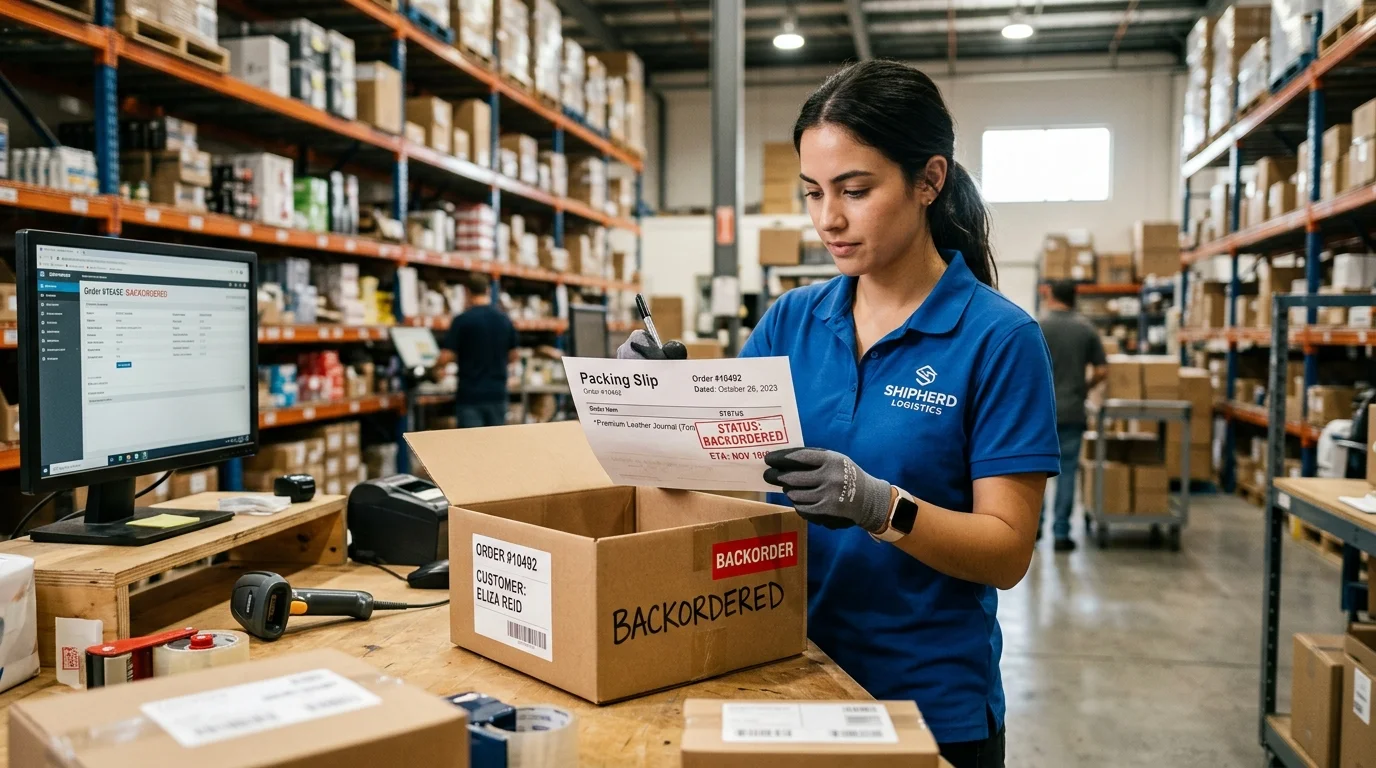
- My laptop order is currently on backorder.
- The store expects new stock next week.
- Your item is backordered because demand exceeded supply.
- The website says the product is available but has a backorder status.
- The retailer emailed me about the backorder.
- My order will ship when the item becomes available.
- The popular camera is currently backordered.
- The supplier has not provided a confirmed delivery date.
- The company is working to clear its backorders.
- The customer canceled the order after a long backorder.
- The product remained on backorder for several weeks.
- The retailer gave me an estimated backorder date.
- The manufacturer increased production to reduce the backlog.
- My order is still active even though it is backordered.
- The seller said the item should ship after the next inventory shipment.
- The product became backordered after a sudden increase in demand.
- The store notified customers about the inventory shortage.
- The backorder delayed my delivery.
- The supplier expects to replenish the item soon.
- The retailer shipped my order after receiving new stock.
Example Sentences
- My order currently shows a backorder status.
- The item is backordered and has not shipped yet.
- The retailer expects more inventory next month.
- The website says the product will ship when available.
- I received an email explaining the backorder.
- The camera has been on backorder for two weeks.
- The company is trying to reduce its growing backorder list.
- High demand caused the product to go on backorder.
- The manufacturer expects to replenish inventory soon.
- My order remains active even though the item is unavailable.
- The seller gave me an estimated backorder date.
- The product was placed on backorder after the warehouse ran out of stock.
- The customer asked whether the backordered item could be canceled.
- The retailer shipped the order after new stock arrived.
- The backorder caused a delay in delivery.
- The supplier is experiencing production delays.
- The store cannot guarantee the exact backorder fulfillment date.
- The customer decided not to wait for the backordered product.
- The retailer notified buyers when the item became available.
- A backorder does not necessarily mean the order has been canceled.
- The company has thousands of backordered units.
- The item was temporarily unavailable because of supply problems.
- The customer checked the order status for an updated shipping estimate.
- The manufacturer increased production to address the backorder.
- The order will be processed when inventory becomes available.
Synonyms
There is no perfect synonym for backorder status, but several related terms may appear on retailer websites.
Awaiting Stock
The seller is waiting for new inventory.
Out of Stock
The product is currently unavailable.
Pending Fulfillment
The order has not yet been completed.
Delayed
The expected shipment has been postponed.
Inventory Shortage
There is insufficient stock to meet current demand.
Stock Replenishment
The process of bringing new inventory into stock.
Order Backlog
A collection of orders waiting to be fulfilled.
Antonyms
In Stock
The product is currently available.
Available
The seller has the product available for purchase or fulfillment.
Ready to Ship
The item is available and prepared for shipment.
Immediate Availability
The product can be supplied without waiting for new inventory.
Fulfilled
The order has been successfully completed.
Similar or Commonly Confused Words
Backorder vs. Out of Stock
Backorder generally indicates an existing order is waiting for future inventory.
Out of stock simply means the seller does not currently have the product.
Backorder vs. Preorder
A preorder is usually placed before a product becomes officially available.
A backorder usually occurs after an already-released product becomes temporarily unavailable.
Backorder vs. Pending
Pending means an order has not been completed.
Backorder specifically relates to insufficient product availability.
Backorder vs. Backlog
A backorder is an individual order or group of orders waiting for inventory.
A backlog is a broader accumulation of unfinished work or orders.
Backorder vs. Delay
A delay can have many causes.
A backorder specifically involves waiting for product inventory.
Common Mistakes
Thinking Backorder Means the Order Is Canceled
A backordered order is usually still active.
Assuming Backorders Have a Guaranteed Delivery Date
An estimated date is not necessarily guaranteed.
Supply conditions can change.
Confusing Backorder With Preorder
A preorder generally happens before a product’s release, while a backorder generally involves an existing product that is temporarily unavailable.
Assuming Every Retailer Uses the Term the Same Way
Retailers can define and display inventory statuses differently.
Thinking Backordered Means the Product Is Discontinued
A backordered product is generally expected to become available again. A discontinued product may no longer be manufactured or sold.
Assuming the Seller Can Always Give an Exact Date
The retailer may depend on a manufacturer or supplier and therefore may only have an estimate.
When and How to Use This Term
Backorder status is primarily used in:
- Online shopping
- Retail
- E-commerce
- Inventory management
- Manufacturing
- Supply-chain management
- Customer service
- Order tracking
It is a practical business and retail term rather than casual slang.
You might see:
“Status: Backordered.”
or:
“Your item is currently on backorder.”
If you are speaking with customer service, you can ask:
“When is the backordered item expected to ship?”
or:
“Can I cancel my order because the item is on backorder?”
Related Expressions
On Backorder
The product is currently unavailable but expected to become available later.
Backordered Item
An item waiting for new inventory.
Backorder Date
An estimated date associated with the arrival or fulfillment of backordered inventory.
Backorder Delay
A delay caused by insufficient inventory.
Backorder List
A list of customer orders waiting for available stock.
Inventory Shortage
A situation in which available inventory is insufficient to meet demand.
Stock Replenishment
The process of adding new inventory after stock has been depleted.
Order Fulfillment
The process of preparing and delivering a customer’s order.
Estimated Ship Date
The expected date when an order will be shipped.
Out of Stock
A status indicating that inventory is currently unavailable.