
Definition in Simple Words
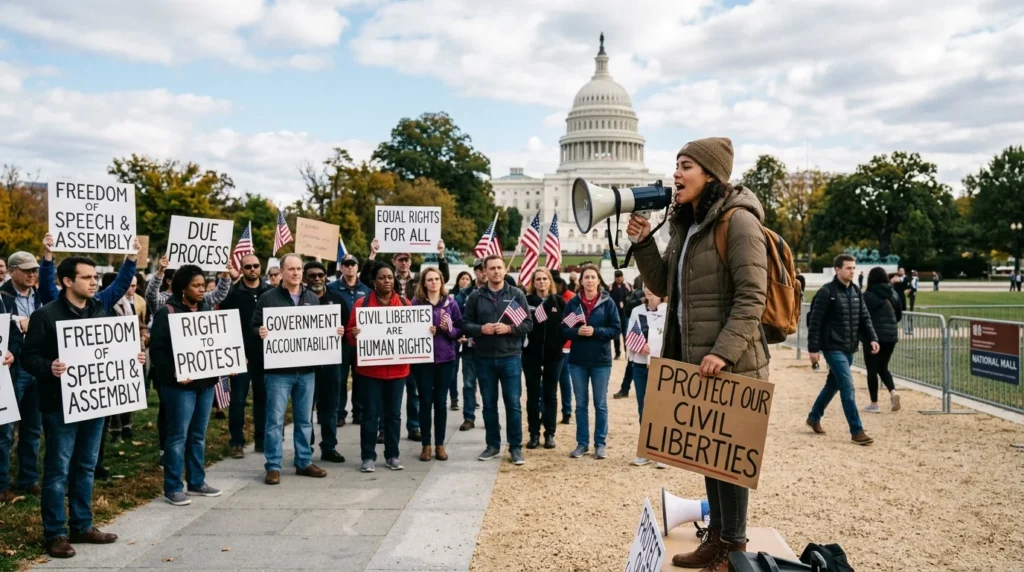
In simple English, civil liberties are basic freedoms that protect people from unfair government interference.
For example, if a country protects freedom of speech, people generally have the right to express opinions without being punished simply because the government dislikes those opinions, subject to the limits established by law.
A simple definition is:
Civil liberties are legal protections that help people exercise fundamental freedoms and protect them from unjust government action.
Pronunciation
Civil liberties
- Pronunciation: /ˈsɪvəl ˈlɪbərtiz/
- Approximate pronunciation: “SIV-uhl LIB-er-teez”
- Part of speech: plural noun
- Singular: civil liberty
Example:
“Freedom of speech is an important civil liberty.”
Origin and Etymology
The word civil comes from Latin civilis, meaning “relating to citizens” or “of a citizen.”
The word liberty comes through Old French from Latin libertas, meaning freedom or the condition of being free.
The broader concept of civil liberties developed through centuries of political and legal thought concerning individual freedom, government authority, and the rights of citizens.
Important historical developments include documents and traditions such as the Magna Carta, the English Bill of Rights, the United States Bill of Rights, and later constitutional and human-rights frameworks around the world.
The modern understanding of civil liberties varies by country and legal tradition. They are generally understood as protections that place limits on government power and preserve important areas of individual freedom.
Meaning in Different Contexts
Civil Liberties in Government
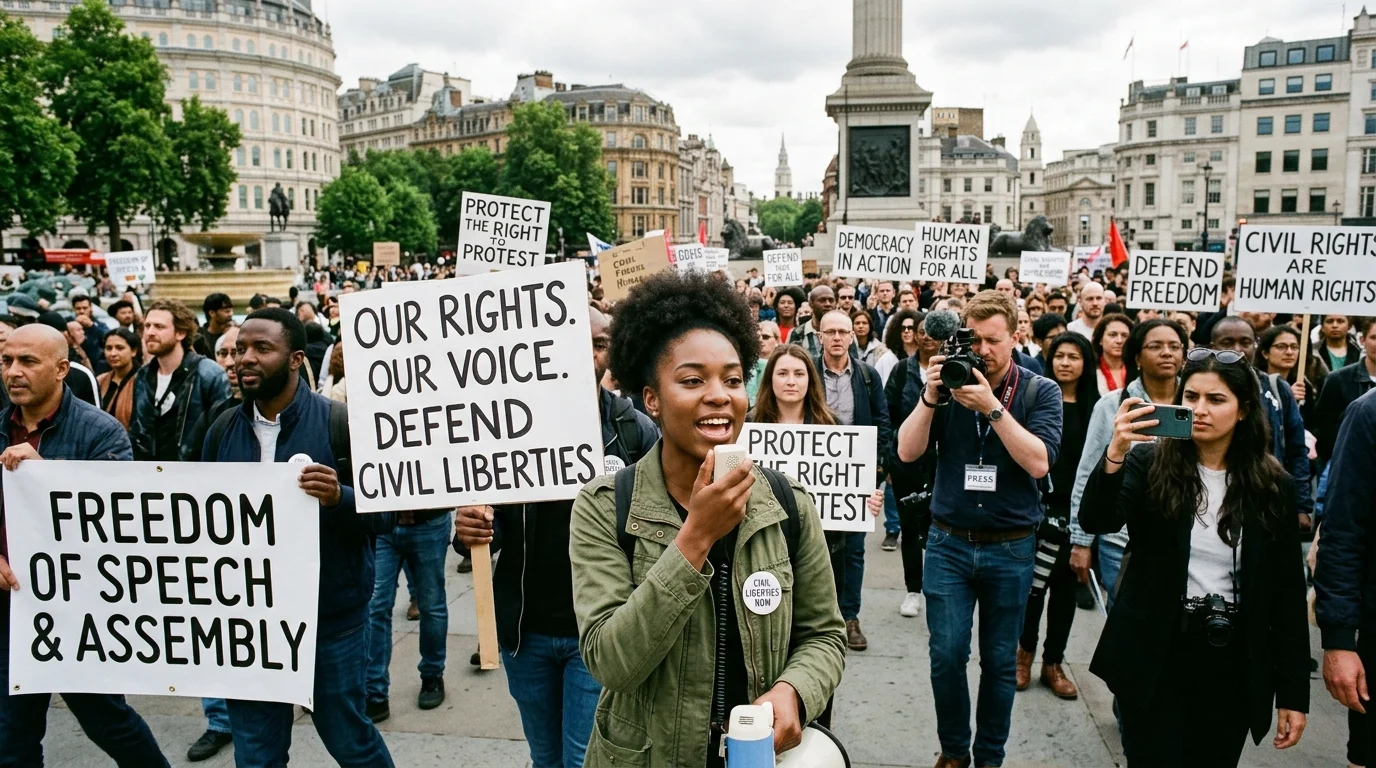
In government, civil liberties describe freedoms that governments are expected to respect and protect.
They can limit what authorities may legally do to individuals.
For example, constitutional protections may restrict government censorship, unreasonable searches, arbitrary detention, or interference with religious practice.
Civil Liberties in Law
In legal contexts, civil liberties are often connected to constitutional rights and judicial protections.
Courts may determine whether government actions violate protected freedoms.
The specific rights and limitations depend on the country’s constitution, legislation, and legal precedents.
Civil Liberties in Democracy
Civil liberties are considered important to democratic societies because democratic participation requires people to be able to:
- Express political opinions
- Associate with others
- Organize peacefully
- Practice religion
- Access information
- Participate in public debate
- Challenge government decisions
Without meaningful protections for these freedoms, political participation can be severely restricted.
Civil Liberties and Freedom of Speech
Freedom of speech is one of the best-known examples of a civil liberty.
It protects people’s ability to express ideas and opinions, although freedom of speech is not necessarily unlimited.
Different legal systems place different restrictions on speech, such as laws concerning threats, certain forms of incitement, or other legally defined categories.
Civil Liberties and Religion
Freedom of religion can protect people’s ability to practice a religion, change religions, follow religious beliefs, or choose not to practice a religion, depending on the applicable legal system.
It can also protect individuals from certain forms of government-imposed religious control.
Civil Liberties and Privacy
Privacy protections can limit government access to personal information, homes, communications, or other private areas.
The exact scope of privacy rights differs considerably between legal systems.
Civil Liberties and Criminal Justice
Civil liberties are particularly important in criminal justice.
Protections may include:
- Due process
- A fair trial
- Legal representation
- Protection from unreasonable searches
- Protection against arbitrary detention
- The presumption of innocence in applicable legal systems
- Protection against certain forms of compelled self-incrimination
These protections are intended to reduce the risk of government abuse.
Civil Liberties in Education
Schools and universities can raise civil-liberties questions involving speech, religion, privacy, peaceful assembly, and disciplinary procedures.
The rights available to students depend on the jurisdiction and the type of educational institution.
Civil Liberties in the Workplace
Civil liberties can intersect with employment issues, particularly when government employers, public institutions, privacy, speech, or religious freedom are involved.
However, not every workplace disagreement is a civil-liberties issue.
Private employers and government authorities can be subject to different legal rules.
Civil Liberties During Emergencies
Emergencies can create difficult questions about the balance between individual freedoms and public safety.
Governments may impose temporary restrictions during situations such as wars, public emergencies, or serious threats, but the legality and limits of such restrictions depend on applicable law.
Examples
- Freedom of speech can be a civil liberty.
- Freedom of religion is commonly recognized as a civil liberty.
- Protection against unreasonable government searches can be a civil liberty.
- The right to due process protects individuals from certain arbitrary government actions.
- Peaceful assembly allows people to gather for lawful purposes.
- Freedom of association protects certain forms of participation with groups and organizations.
- Privacy protections can limit government access to personal information.
- A fair-trial guarantee is an important legal protection.
- Protection against arbitrary detention is a major civil-liberties concern.
- Freedom of the press supports public discussion and accountability.
- A constitution may establish protections for civil liberties.
- Courts can be asked to determine whether government actions violate protected liberties.
- Citizens may challenge certain government restrictions through the legal system.
- Civil-liberties organizations often monitor government policies affecting individual freedoms.
- A law restricting peaceful political expression may raise civil-liberties questions.
- Government surveillance can raise privacy and civil-liberties concerns.
- Restrictions on religious practice may raise freedom-of-religion issues.
- A ban on peaceful demonstrations may raise assembly concerns.
- Due-process protections can become important when someone is accused of a crime.
- Civil liberties can become especially important when government power expands during an emergency.
Example Sentences
- Freedom of speech is widely recognized as an important civil liberty.
- The court considered whether the policy violated civil liberties.
- Civil liberties protect individuals from certain forms of government interference.
- The organization campaigns to protect civil liberties.
- Privacy is an increasingly important civil-liberties issue.
- The new law sparked a debate about civil liberties.
- Citizens expressed concern that the measure could restrict their civil liberties.
- Freedom of religion is an important civil liberty in many constitutional systems.
- Civil liberties can become controversial during national emergencies.
- The judge examined whether the government’s actions violated constitutional protections.
- The debate involved both public safety and individual civil liberties.
- Civil-liberties protections vary between countries.
- The government defended the policy as necessary for security.
- Critics argued that the policy placed excessive restrictions on individual freedom.
- The case raised important questions about privacy and civil liberties.
- Freedom of peaceful assembly is an important civil liberty.
- Due process is closely connected to civil liberties.
- Civil liberties help limit the abuse of government authority.
- The constitution provides important protections for individual liberties.
- The debate focused on how to balance security with civil liberties.
Synonyms
There is no perfect synonym for civil liberties, but several related terms overlap with the concept.
Individual Freedoms
A broad phrase referring to freedoms enjoyed by individuals.
Constitutional Liberties
Freedoms specifically protected by a constitution.
Fundamental Freedoms
Basic freedoms considered essential to human dignity and individual autonomy.
Personal Freedoms
A broad expression for freedoms concerning an individual’s choices and activities.
Legal Protections
Rights or safeguards established and enforced through law.
Basic Rights
A broad term for important rights recognized by a legal or political system.
Civil Rights
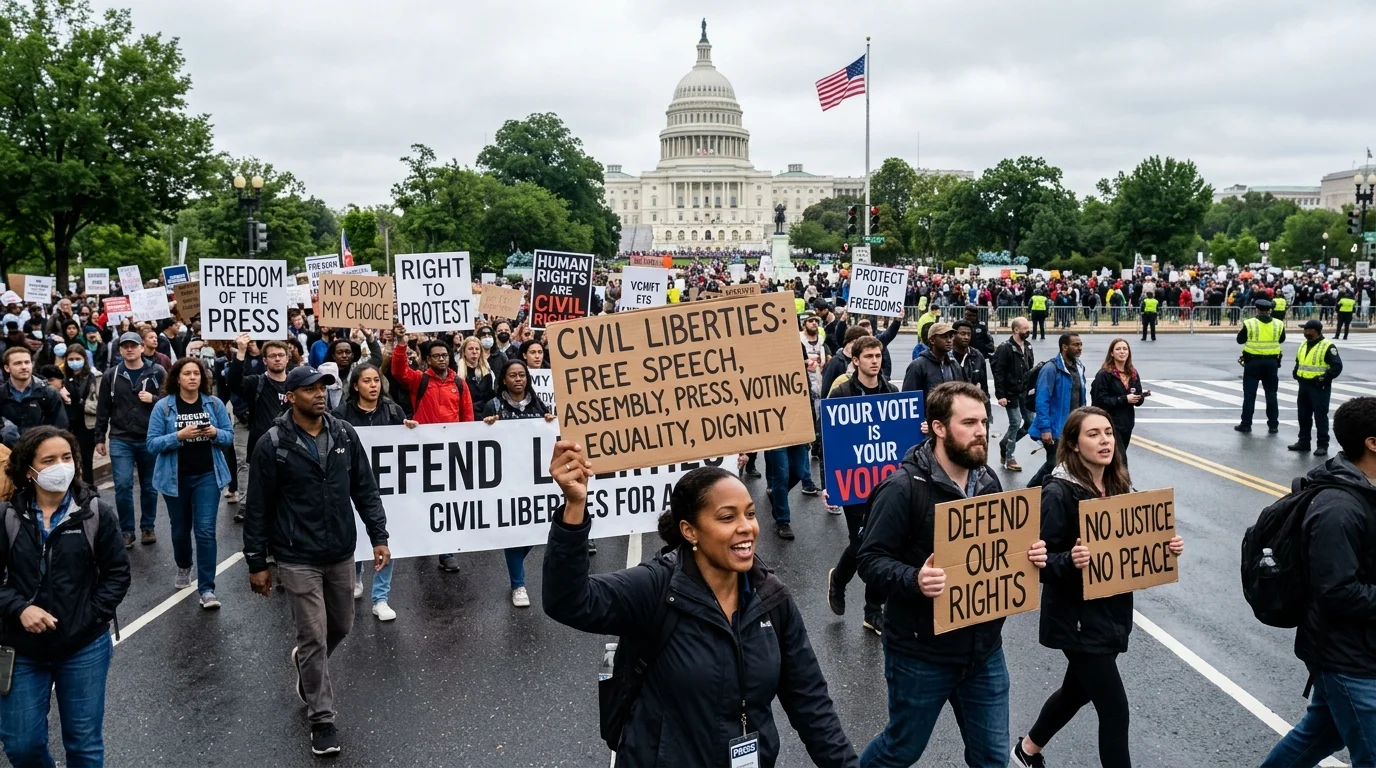
Closely related but not identical. Civil rights generally concern equal treatment and protection from discrimination, while civil liberties more often concern freedom from government interference.
Antonyms
Civil liberties do not have one exact antonym, but contrasting concepts include:
Government Oppression
The unjust or excessive exercise of government power over individuals.
Authoritarianism
A political system characterized by concentrated authority and limited political freedoms.
Arbitrary Government Power
Government action that is exercised without sufficient legal justification or fair standards.
Censorship
The suppression or restriction of information, speech, or expression by an authority.
Political Repression
The use of power to suppress political activity, opposition, or expression.
Arbitrary Detention
Holding a person without adequate legal justification or due process.
Similar or Commonly Confused Words
Civil Liberties vs. Civil Rights
These terms are closely related but often have different emphases.
Civil liberties generally concern individual freedoms and protection from government interference.
Civil rights generally concern equal treatment, participation, and protection from discrimination.
For example:
Freedom of speech is commonly discussed as a civil liberty.
Protection against racial discrimination is commonly discussed as a civil-rights issue.
The distinction can vary depending on the legal and political context.
Civil Liberties vs. Human Rights
Human rights is a broader concept referring to fundamental rights and freedoms recognized as belonging to human beings generally.
Civil liberties usually refers more specifically to freedoms protected within a particular political and legal system.
Civil Liberties vs. Civil Law
These terms are not the same.
Civil liberties concern individual freedoms.
Civil law can refer to a legal tradition or to laws governing private disputes, depending on context.
Liberty vs. Freedom
These words are often interchangeable.
Liberty can have a more legal or political tone, especially in discussions about rights and government.
Freedom is broader and more common in everyday English.
Civil Liberties vs. Privileges
A liberty or legal right is generally protected by law, while a privilege can mean a benefit or permission granted under particular conditions.
They should not automatically be treated as interchangeable.
Common Mistakes
Thinking Civil Liberties Mean Unlimited Freedom
Civil liberties are not necessarily absolute.
Legal systems may impose restrictions that meet particular legal standards.
Assuming Civil Liberties Are the Same Everywhere
Different countries provide different constitutional and statutory protections.
A civil liberty recognized in one country may have a different scope elsewhere.
Confusing Civil Liberties With Civil Rights
The terms overlap, but they often emphasize different concepts.
Civil liberties generally emphasize freedom from government interference, while civil rights often emphasize equal treatment and protection from discrimination.
Assuming Only Political Speech Is Protected
Civil liberties can cover many areas, including religion, privacy, assembly, due process, and other freedoms.
Thinking Civil Liberties Only Protect Innocent People
Legal protections such as due process and fair-trial rights are designed to apply to people involved in legal proceedings, including those accused of crimes.
Assuming Civil Liberties Prevent All Government Restrictions
Governments can impose certain restrictions under law.
The important question is whether the restriction is legally authorized and consistent with applicable constitutional or human-rights protections.
When and How to Use This Term
Civil liberties is a formal and widely used term in:
- Law
- Politics
- Government
- Constitutional studies
- History
- Journalism
- Political science
- Human-rights discussions
- Public policy
- Academic writing
It is appropriate in both formal and general discussions.
For example:
“The proposed law raised concerns about civil liberties.”
In casual conversation, someone might simply say:
“It could limit people’s freedom.”
Related Expressions
Civil Liberties Protection
Efforts to preserve individual freedoms and legal protections.
Civil Liberties Organization
An organization that advocates for civil liberties.
Constitutional Rights
Rights protected by a constitution.
Freedom of Speech
The ability to express opinions and ideas, subject to applicable legal limitations.
Freedom of Religion
The freedom to practice, change, or reject religious beliefs within the protections of the relevant legal system.
Freedom of Assembly
The ability to gather peacefully for lawful purposes.
Due Process
Legal procedures designed to ensure fair treatment by authorities.
Right to Privacy
Legal protections concerning personal privacy and government or other forms of intrusion.
Freedom of the Press
Protection for journalistic expression and publication, subject to applicable laws.
Individual Liberty
The freedom of individuals to make choices without unjustified interference.