

Definition in Simple Words
In very simple English, a female family leader is:
A woman who is the main person guiding, supporting, organizing, or making important decisions for her family.
The simplest single word for this person is often matriarch.
For example:
“Her grandmother is the matriarch of the family.”
This means the grandmother is the respected and influential female head of the family.
A female family leader could be:
- A mother
- A grandmother
- An older sister
- An aunt
- A wife
- An eldest daughter
- Another senior or respected woman in the family
The person does not necessarily have to be the oldest woman. Leadership may come from responsibility, experience, authority, respect, financial contribution, or family circumstances.
Pronunciation
The most common word associated with female family leader is matriarch.
Matriarch
- Pronunciation: /ˈmeɪ.tri.ɑːrk/ or /ˈmeɪ.tri.ɑːrk/
- Approximate pronunciation: “MAY-tree-ark”
- Part of speech: noun
- Plural: matriarchs
The phrase female family leader itself is pronounced:
FEE-male FAM-uh-lee LEE-der
The word matriarch is especially useful when you want one established English word instead of the longer phrase “female family leader.”
Origin and Etymology
The word matriarch dates to around the beginning of the 17th century, with Merriam-Webster giving its first known use as 1606.
It is formed from matri-, relating to “mother,” and -arch, a word element associated with ruling or leadership. The matri- element ultimately comes from Latin mater, meaning “mother.”
The structure parallels patriarch, traditionally associated with a male head or father figure in a family. The word patriarch itself comes through Greek and Latin roots connected with family lineage and fatherhood.
It is important to distinguish matriarch from matriarchy.
A matriarch is a woman who heads or leads a family or group.
A matriarchy refers to a family, group, or state governed by a matriarch, and can also refer to a social system in which descent and inheritance are traced through the female line.
Therefore, calling a woman the matriarch of a family does not automatically mean that the entire society or culture is a matriarchy.
Meaning in Different Contexts
In Family Life
In ordinary family life, a female family leader is often the person relatives turn to for guidance, important decisions, organization, or emotional support.
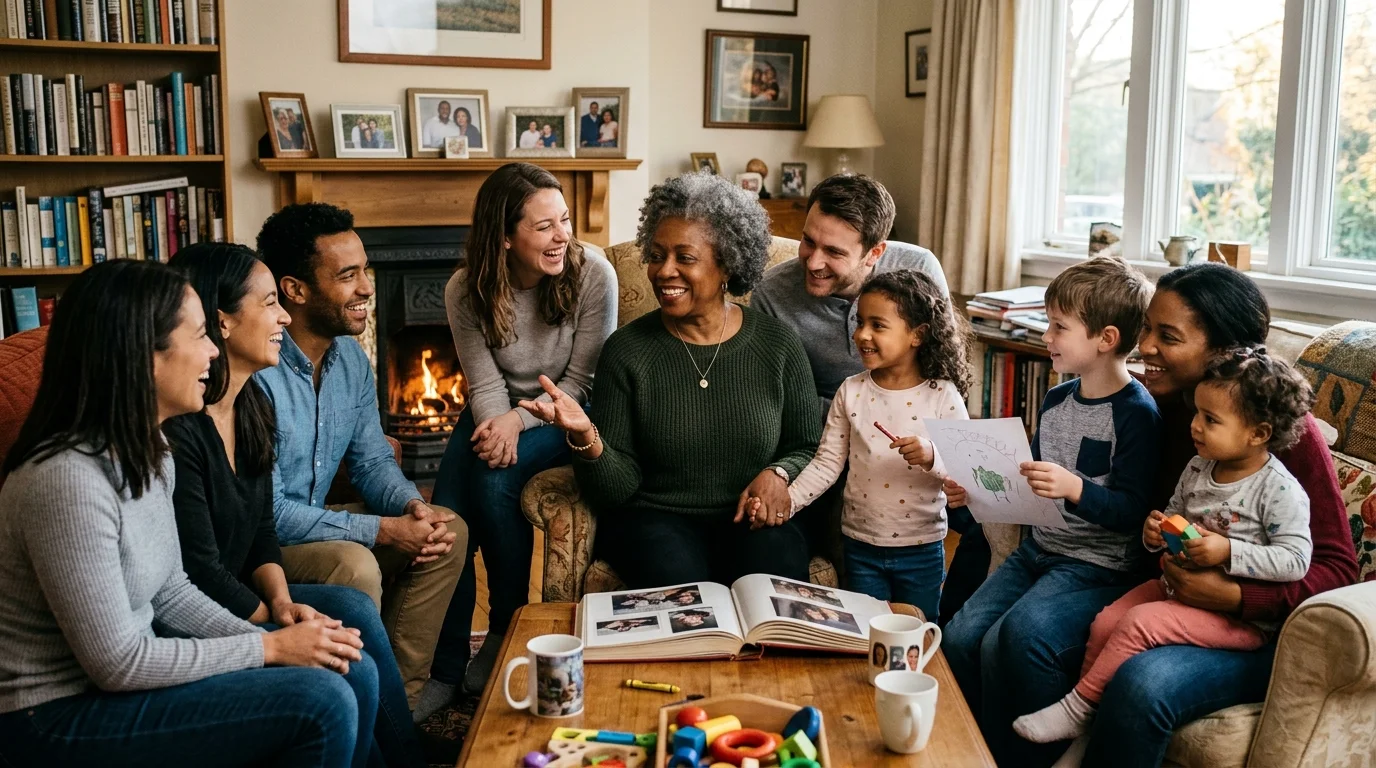
For example, a grandmother may be considered the family matriarch because everyone respects her judgment and looks to her when the extended family needs to make an important decision.
In Extended Families
The term matriarch is particularly common when discussing large or multigenerational families.
A grandmother or great-grandmother may become the symbolic center of the family, particularly when she has played an important role across several generations.
In Business Families
A woman can also be the leader of a family-owned business.
For example:
“After her husband’s retirement, Maria became the matriarch and chief decision-maker of the family business.”
Here, matriarch emphasizes her role within the family, while chief executive, owner, or director might describe her formal business position.
In Cultural Contexts
The idea of a female family leader can vary considerably between cultures.
Some families emphasize seniority, while others emphasize parental authority, financial responsibility, experience, or individual decision-making.
Consequently, being the “female leader” of a family does not have one universal set of duties.
In Genealogy
In genealogy and family-history writing, matriarch may refer to an important female ancestor or the senior woman around whom a family line is organized.
For example:
“The family photographs tell the story of its matriarch, who raised four generations.”
In Literature
Writers often use matriarch to describe a powerful, influential, or respected woman at the center of a family.
The word can suggest:
- Authority
- Wisdom
- Age
- Family history
- Tradition
- Strength
- Influence
- Responsibility
Depending on the story, however, a matriarch can be portrayed positively, negatively, or somewhere in between.
In Religion
Some religious communities may use family structures in which mothers, grandmothers, or other women have significant leadership or caregiving responsibilities.
However, matriarch is a general English term and should not automatically be interpreted as a religious title.
In Psychology and Family Studies
In discussions of family dynamics, a woman may function as the family’s central organizer, emotional anchor, or decision-maker.
Calling her a matriarch describes her position or influence, but it does not by itself explain whether her leadership is democratic, authoritarian, cooperative, or informal.
In Social Media and Popular Culture
On social media, people sometimes use matriarch affectionately to describe a mother or grandmother who keeps a large family connected.
For example:
“She’s the matriarch of the whole family.”
This can be a term of admiration and affection rather than a formal description of authority.
Examples
Here are practical examples of what female family leader can mean:
- A grandmother who makes major decisions for an extended family may be called its matriarch.
- A mother who manages the household and guides her children may be described as the family’s female leader.
- An aunt who becomes the main source of advice after a family crisis may take on a leadership role.
- An eldest daughter who supports younger siblings may become an important family leader.
- A widow who manages family finances and organizes her children’s lives may become the head of the household.
- A grandmother who preserves family traditions may be viewed as the family matriarch.
- A woman who owns and manages a family business may be its family’s central authority.
- A mother who resolves family disputes may be regarded as the family’s key decision-maker.
- A senior woman who brings several generations together may be considered the family matriarch.
- A woman who provides financial support for relatives may have significant influence within the family.
- An older sister who takes responsibility for younger siblings may become a practical family leader.
- A grandmother who everyone consults before major decisions may function as the family’s informal leader.
- A mother who coordinates family events may serve as the family’s organizational center.
- A respected woman may become the symbolic representative of her family.
- A senior female relative may preserve important family customs and stories.
- A woman may lead her family without holding any official title.
- A female head of household may be described as a family leader without being called a matriarch.
- A family may have both a male and female leader in different areas of responsibility.
- A woman can be the emotional center of a family without controlling its decisions.
- A family may call its grandmother the matriarch simply because she is the most respected senior woman.
Example Sentences
- My grandmother is the matriarch of our family.
- Everyone looks to Sarah as the family’s female leader.
- Her mother became the head of the family after her father’s death.
- The grandmother is widely respected as the family matriarch.
- She has served as the family’s main decision-maker for many years.
- Our aunt became an important leader within the extended family.
- The family matriarch welcomed everyone into her home during the holidays.
- Her grandmother is the person everyone calls when they need advice.
- The eldest woman in the family has traditionally held a leadership role.
- Maria is considered the matriarch of the family business.
- The family gathered around its matriarch for her 80th birthday.
- She became the family’s main source of guidance after her husband retired.
- The children regard their grandmother as the heart of the family.
- The novel centers on a powerful female family leader.
- Her role as matriarch extends across three generations.
- The family’s matriarch is known for bringing everyone together.
- She is not officially in charge, but everyone respects her leadership.
- The grandmother remains an influential figure in the extended family.
- The family looks to its matriarch when difficult decisions must be made.
- Her leadership is based more on trust and experience than formal authority.
- The family matriarch keeps its traditions alive.
- She became the family’s strongest decision-maker during a difficult period.
- Being the family leader does not mean she makes every decision alone.
- The matriarch encouraged the younger members of the family to stay connected.
- Her position as the family’s senior woman gives her considerable influence.
Synonyms
There is no single synonym that perfectly matches female family leader in every situation.
Matriarch
The closest and most established term. It commonly refers to a woman who heads or strongly influences a family or group.
Female Head of the Family
A clear descriptive expression for a woman who is the principal head of a family.
Head of Household
A broader term that can apply to a man or woman. It emphasizes household responsibility rather than gender.
Family Leader
A gender-neutral expression for someone who provides leadership within a family.
Family Figurehead
Describes someone who represents or symbolizes the family, although a figurehead may not actually make decisions.
Materfamilias
A more formal or literary term referring to the female head of a household or family.
Mother Figure
Describes a woman who provides care, guidance, or emotional support. It does not necessarily mean she is the family’s official or practical leader.
Senior Woman
A descriptive expression that emphasizes age or seniority rather than authority.
Family Elder
A gender-neutral expression for a respected older family member. An elder does not necessarily have formal authority.
Antonyms
The most direct conceptual counterpart to matriarch is patriarch.
Patriarch
A patriarch is traditionally a man who is the head or senior authority of a family or group. Merriam-Webster includes the meaning of a man who is the head of a patriarchy and also gives family-head meanings.
Other contrasting concepts include:
- Male family leader — a descriptive counterpart to female family leader.
- Patriarchal family structure — a family structure in which authority is associated primarily with men.
- Dependent family member — someone who relies on other family members rather than leading them.
- Follower — someone who takes direction rather than providing leadership.
There is no exact antonym of female family leader because families can have complex and shared leadership structures.
Similar or Commonly Confused Words
Matriarch vs. Matriarchy
These words are closely related but mean different things.
Matriarch = a woman who heads or strongly leads a family or group.
Matriarchy = a family, group, or social system governed by a matriarch or organized around female-line descent.
So:
“My grandmother is the matriarch of our family.”
does not necessarily mean:
“Our society is a matriarchy.”
Matriarch vs. Matriarchal
Matriarch is a noun referring to a woman.
Matriarchal is an adjective meaning relating to or characterized by a matriarch or matriarchy.
Examples:
- “She is the family matriarch.”
- “The family has a matriarchal structure.”
Matriarch vs. Mother
A mother is a female parent.
A matriarch is a woman who holds a leadership or influential role in a family or group.
Not every mother is a matriarch.
Matriarch vs. Grandmother
A grandmother is the mother of someone’s parent.
A matriarch may be a grandmother, but she does not have to be one.
Matriarch vs. Head of Household
Head of household emphasizes household status or responsibility.
Matriarch emphasizes female leadership, seniority, authority, or influence within a family or group.
Matriarch vs. Female Head
Female head is a broad descriptive phrase.
Matriarch is a more specific established noun with cultural and family associations.
Common Mistakes
Assuming Every Female Family Leader Is a Matriarch
Although matriarch is usually the closest word, context matters.
A woman can lead a household without being described as a matriarch, particularly when the situation is temporary or purely administrative.
Thinking Matriarch Always Means Mother
A matriarch is often a mother or grandmother, but the word does not strictly require the woman to be a mother.
The central idea is leadership or authority within the family or group.
Confusing Matriarch With Matriarchy
These are not interchangeable.
A woman can be a family’s matriarch without the surrounding society being matriarchal.
Assuming Matriarch Means Absolute Control
Calling someone a matriarch does not necessarily mean that she controls every family decision.
The term can describe influence, respect, seniority, leadership, or symbolic importance.
Assuming the Oldest Woman Is Automatically the Leader
Age can contribute to someone’s status, but being the oldest woman does not automatically make someone the family leader.
Using Matriarchal as a Noun
Matriarchal is normally an adjective.
Correct:
“The family has a matriarchal structure.”
Incorrect:
“She is the matriarchal of the family.”
The correct noun is matriarch.
Assuming Female Leadership Must Be Formal
Family leadership is frequently informal.
A woman may have no official title while still being the person relatives rely on for important decisions and guidance.
When and How to Use This Word
The phrase female family leader is understandable and grammatically correct, but it is somewhat descriptive rather than idiomatic.
If you are looking for a single natural English word, matriarch is usually the best choice.
Use matriarch when:
- A woman leads or strongly influences a family.
- A grandmother is the senior authority in an extended family.
- A woman is the central figure in a multigenerational family.
- You are writing about family history.
- You are describing a powerful female family figure in literature.
- You want a respectful or formal description of a family’s senior woman.
Use female family leader when you need to emphasize the gender and leadership role explicitly, especially in explanatory writing.
The word matriarch is generally neutral to formal. Depending on context, it can also sound affectionate or respectful.
For casual conversation, people may simply say:
- “She runs the family.”
- “She’s the head of the family.”
- “Everyone looks up to her.”
- “She’s the one who keeps everyone together.”
Related Expressions
Several expressions are closely connected with the idea of a female family leader:
- Family matriarch — a woman who is the central leader or senior figure in a family.
- Head of the family — the principal authority or representative of a family.
- Head of household — a person recognized as responsible for a household.
- Family elder — a respected older member of a family.
- Mother figure — a woman who provides maternal guidance or care.
- Family authority — someone whose opinions or decisions carry significant weight.
- Family decision-maker — someone who makes important family decisions.
- Family matriarchy — a family structure governed by a matriarch.
- Matriarchal family — a family characterized by female leadership or influence.
- Strong maternal figure — a woman who provides significant guidance, care, or authority.
- Female head of household — a descriptive term for a woman heading a household.