
Definition in Simple Words
In simple language:
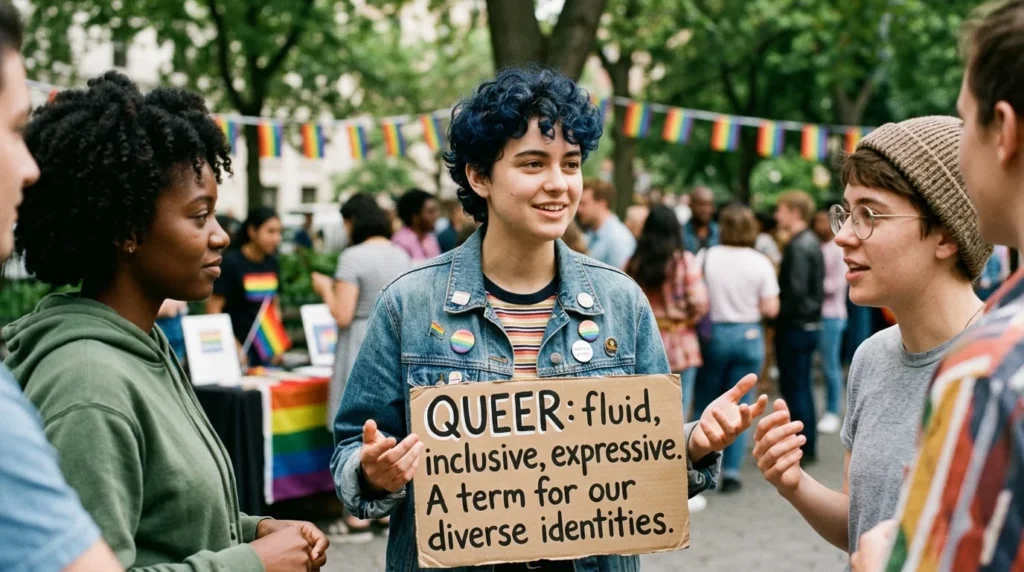
Queer is a broad LGBTQ+ term used by some people whose sexuality or gender falls outside traditional heterosexual and cisgender categories.
However, not every LGBTQ+ person identifies as queer, and some people dislike the term because of its history as a slur.
Pronunciation
Queer is pronounced:
KWEER
Phonetic transcription:
/kwɪr/
Part of speech: Adjective or noun, depending on usage.
Historical Meaning
The word queer originally had meanings such as strange, unusual, or odd.
During the 19th and 20th centuries, it increasingly became a derogatory term directed at people perceived to be homosexual or gender-nonconforming.
Over time, many LGBTQ+ communities began reclaiming the word and using it as a positive or neutral identity.
Today, queer has both:
- A reclaimed LGBTQ+ meaning
- A history as an anti-LGBTQ+ slur
This history explains why reactions to the word can differ significantly.
Queer as an LGBTQ+ Identity
A person may identify as queer rather than using a more specific identity such as gay, lesbian, bisexual, or another label.
For example:
“I identify as queer.”
This can communicate a broad LGBTQ+ identity without specifying exactly where someone fits within sexuality or gender categories.
Queer identity can also involve a person’s understanding of sexuality or gender as fluid, complex, or not easily categorized.
Queer as an Umbrella Term
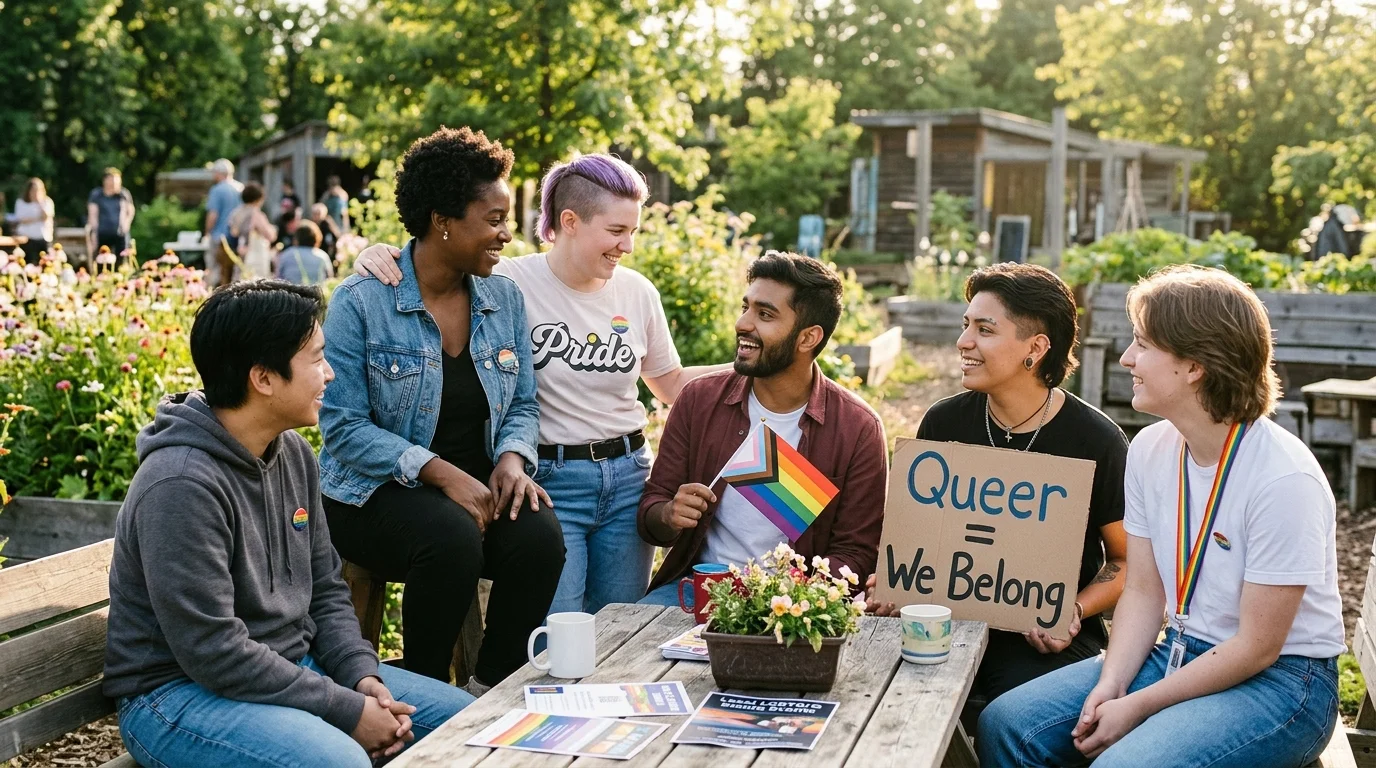
Sometimes queer is used as an umbrella term for LGBTQ+ people.
For example:
“The organization supports queer communities.”
Here, queer may refer broadly to people with diverse sexual orientations and gender identities.
This use does not necessarily mean that every person being discussed personally identifies as queer.
Queer as an Adjective
Queer can describe things related to LGBTQ+ communities or experiences.
Examples include:
- Queer community
- Queer literature
- Queer history
- Queer culture
- Queer studies
- Queer representation
- Queer activism
- Queer art
In these expressions, queer generally means connected with LGBTQ+ identities, experiences, culture, or scholarship.
Queer and Sexual Orientation
Queer can describe someone’s sexual orientation, but it does not provide the same specific information as labels such as:
- Gay
- Lesbian
- Bisexual
- Pansexual
- Asexual
A person who identifies as queer may intentionally prefer not to define their sexuality more narrowly.
Queer and Gender Identity
Queer can also relate to gender identity or gender expression.
Some people whose gender does not fit conventional categories may use queer as part of their identity.
However, queer is not synonymous with transgender.
A transgender person may or may not identify as queer, just as a queer person may or may not identify as transgender.
Queer vs. LGBTQ+
These terms are related but aren’t identical.
LGBTQ+ is an umbrella acronym representing multiple sexual and gender identities.
Queer is a word that some people use as an umbrella identity or broader description.
For example:
“LGBTQ+ community”
is generally a broad community term.
“Queer community”
may similarly refer broadly to LGBTQ+ people, but it can also specifically refer to people who personally identify as queer.
Queer vs. Gay
Gay generally refers to someone who experiences romantic or sexual attraction to people of the same gender, although usage can vary.
Queer is broader and less specific.
A person can identify as both gay and queer.
Queer vs. Bisexual
Bisexual is a specific sexual-orientation identity.
Queer is broader and can encompass bisexuality but does not specify a particular pattern of attraction.
Someone may therefore identify as bisexual, queer, or both.
Queer vs. Transgender
Transgender describes someone whose gender identity differs from the sex they were assigned at birth.
Queer is broader and can refer to sexuality, gender, or both.
A transgender person is not automatically queer, and a queer person is not automatically transgender.
Examples
- “She identifies as queer.”
- “He came out as queer during college.”
- “The event celebrates queer culture.”
- “The organization provides services for queer youth.”
- “Queer history is an important area of academic study.”
- “The film features queer characters.”
- “They prefer the term queer because it feels more inclusive.”
- “The artist’s work explores queer identity.”
- “The book examines queer literature.”
- “Some people use queer as an umbrella identity.”
- “Not every LGBTQ+ person identifies as queer.”
- “The word queer has a complicated history.”
- “Many LGBTQ+ people have reclaimed the term.”
- “She describes herself as queer and transgender.”
- “The community center offers queer-inclusive programs.”
Example Sentences
- She identifies as queer rather than using a more specific label.
- The university offers a course on queer history.
- The organization advocates for queer rights.
- He describes his sexuality as queer.
- The festival celebrates queer artists.
- They are part of the local queer community.
- The author explores queer identity in the novel.
- Queer representation has become an important topic in media.
- The term has a long and complicated history.
- Some people proudly identify as queer.
- Others prefer not to use the word because of its historical use as a slur.
- The group provides support for queer students.
- She identifies as both bisexual and queer.
- He uses queer as a broad description of his identity.
- Queer can refer to sexuality, gender, or both depending on the individual.
Is “Queer” a Slur?
Historically, yes. Queer was widely used as a derogatory term against LGBTQ+ people.
However, many LGBTQ+ people have reclaimed the word and now use it positively or neutrally.
Whether it is appropriate depends on:
- Who is using the word
- Who is being described
- Whether the person identifies with the term
- The social and cultural context
- Tone and intent
A useful rule is:
If someone tells you they identify as queer, it is generally respectful to use the term they have chosen for themselves.
If you are unsure whether someone is comfortable with the word, using the person’s stated identity or asking what terminology they prefer is safest.
Synonyms and Related Terms
There is no exact synonym for queer because it can function as both an identity and an umbrella term.
Related terms include:
- LGBTQ+
- LGBTQIA+
- Gay
- Lesbian
- Bisexual
- Transgender
- Nonbinary
- Gender-diverse
- Sexual minority
- Gender minority
These terms are not interchangeable, because each can describe different identities.
Common Mistakes
Assuming Everyone LGBTQ+ Identifies as Queer
Not everyone does.
Some people strongly prefer labels such as gay, lesbian, bisexual, transgender, or another specific identity.
Assuming Queer Only Means Gay
It can encompass a much broader range of sexual and gender identities.
Assuming Queer Always Refers to Sexual Orientation
The word can also relate to gender identity, gender expression, or broader LGBTQ+ experiences.
Assuming Queer Is Always Offensive
It has a history as a slur, but many LGBTQ+ people have reclaimed it and use it positively.
Assuming Queer Is Always Accepted
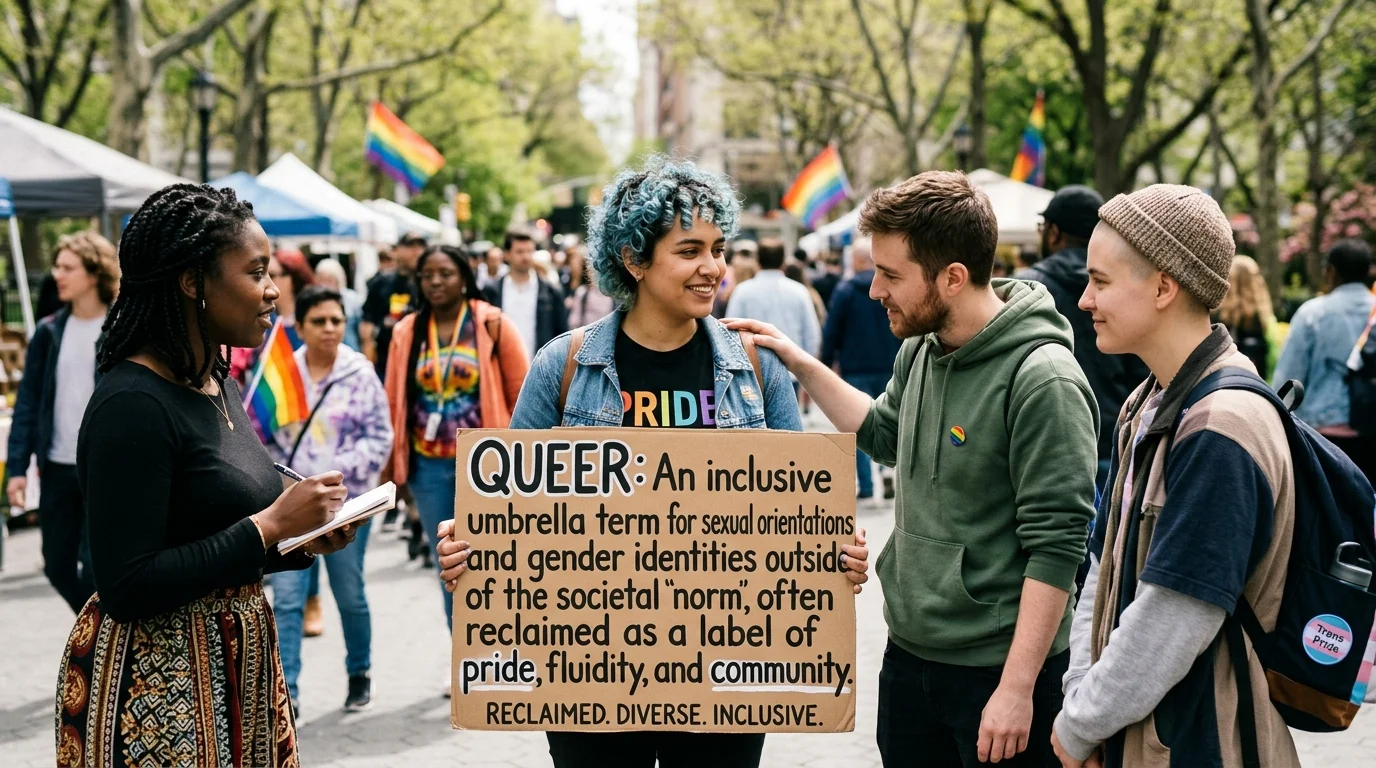
Some people still find the word offensive or uncomfortable because of its historical use.
When and How to Use “Queer”
Use queer respectfully when:
- Someone uses it to describe themselves.
- You’re discussing queer history or culture.
- You’re referring to scholarship such as queer studies.
- You’re describing an LGBTQ+-related topic in a context where the term is appropriate.
Be cautious when using it to describe another individual unless you know they use or accept the term.
For example, it is generally safer to say:
“She identifies as queer.”
than to label someone queer without knowing whether they identify with the term.