
Definition in Simple Words
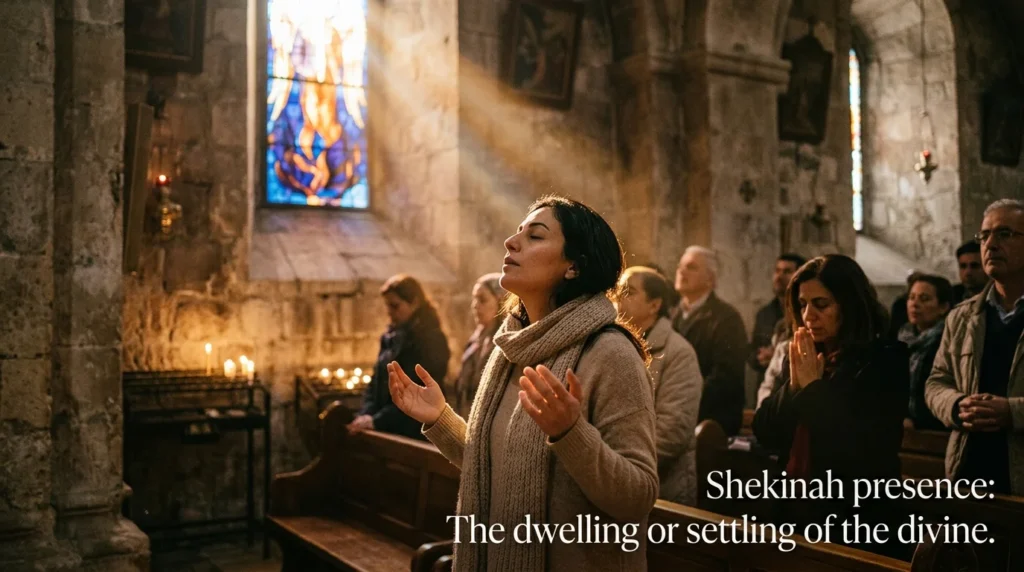
In simple English, Shekinah presence means the presence of God dwelling with or among people.
A very simple definition is:
Shekinah presence is the understood or experienced presence of God, especially when His presence is believed to be revealed in a powerful way.
For someone using the phrase in Christian worship, it may mean:
“I strongly sensed God’s presence.”
In Jewish theological discussions, the concept is more closely connected with the idea of God dwelling among His people.
Pronunciation
Shekinah
- Pronunciation: /ʃəˈkaɪ.nə/ or commonly /ʃəˈkiː.nə/
- Approximate pronunciation: “shuh-KYE-nuh” or “shuh-KEE-nuh”
- Part of speech: noun
- Language: Hebrew-derived theological term
The spelling can also appear as Shekhinah or Shechinah.
The Hebrew term is commonly written שְׁכִינָה (Shekhinah).
Origin and Etymology
The term Shekinah comes from a Hebrew root associated with the idea of dwelling, settling, or residing.
The root sh-kh-n (שכן) conveys the idea of dwelling or residing.
The noun Shekhinah developed in Jewish religious literature as a way of referring to God’s dwelling or presence among people.
Interestingly, the exact word Shekhinah does not appear as a noun in the Hebrew Bible in the same way it appears in later Jewish writings. The concept developed significantly in rabbinic literature and Jewish tradition.
The idea, however, is closely connected with biblical passages describing God dwelling among His people.
For example, the Hebrew Bible describes God’s glory filling the Tabernacle after its construction. Later Jewish interpretation developed language for discussing this divine dwelling presence.
The term was subsequently adopted into Christian theological and devotional language, where “Shekinah glory” and “Shekinah presence” are often used to describe the manifest presence of God.
Meaning in Different Contexts
Shekinah Presence in Judaism
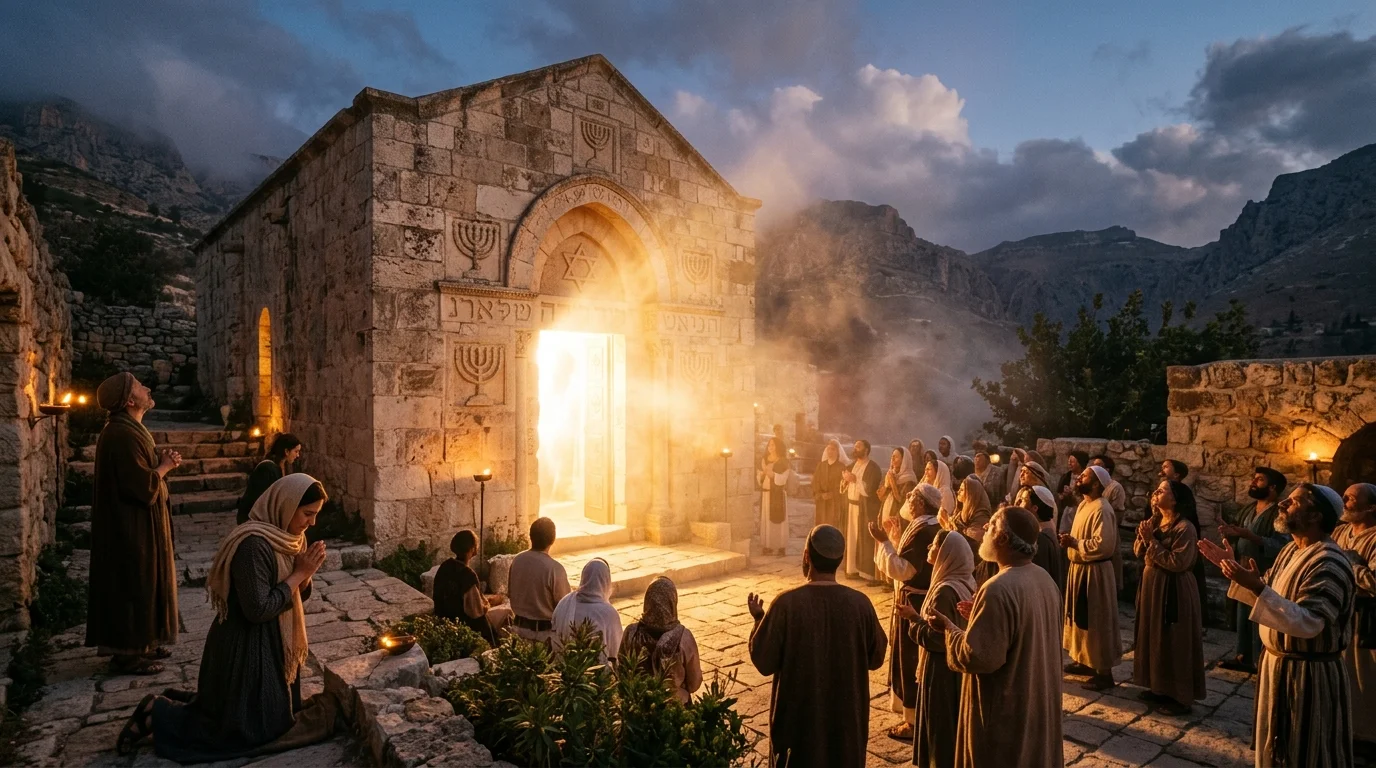
In Jewish tradition, the Shekhinah is associated with God’s dwelling presence among His people.
It is particularly connected with biblical and rabbinic discussions of God’s presence in places and circumstances involving:
- Worship
- The Tabernacle
- The Temple
- Prayer
- Community
- Torah study
- Exile and restoration
Jewish understandings of the Shekhinah can be complex, and different Jewish traditions interpret the concept in different ways.
It is therefore better understood as a theological concept surrounding God’s dwelling presence rather than simply as a physical object or separate divine being.
Shekinah Presence in Christianity
Many Christians use Shekinah presence to describe an intense or perceptible manifestation of God’s presence.
For example:
“We felt the Shekinah presence during worship.”
In this setting, the phrase may describe:
- A profound sense of God’s nearness
- A powerful worship experience
- Spiritual awe
- A sense of peace
- A sense of divine glory
- An emotionally intense prayer experience
This usage is particularly common in charismatic and Pentecostal Christian communities, although the phrase is also used more broadly.
Shekinah Glory
Shekinah glory is a related expression.
It usually emphasizes the glory of God as manifested or revealed among people.
For example:
“The Shekinah glory filled the sanctuary.”
The speaker is expressing the belief that God’s glory was powerfully present.
Shekinah Presence in the Bible
The specific noun Shekinah is not a standard biblical Hebrew term found throughout the Old Testament.
Instead, the concept is derived from biblical descriptions of God dwelling among His people.
Important passages commonly associated with the concept include descriptions of:
- God’s presence in the Tabernacle
- God’s glory filling the Tabernacle
- God’s presence in the Temple
- God’s guidance of Israel
- God’s dwelling among His people
For example, Exodus 25:8 contains the well-known idea:
“Let them make me a sanctuary; that I may dwell among them.”
This idea of divine dwelling is central to the later concept of Shekhinah.
Shekinah Presence in Worship
In worship settings, particularly Christian worship, someone may use Shekinah presence to describe an unusually powerful spiritual experience.
A person might say:
“The room was filled with the Shekinah presence of God.”
This does not necessarily mean that the person believes God became physically visible. It may describe a subjective experience of God’s nearness.
Shekinah Presence in Prayer
Some believers use the term when describing moments during prayer when they experience:
- Peace
- Awe
- Comfort
- Conviction
- Spiritual closeness
- Deep emotional connection
For example:
“I sensed the Shekinah presence while praying.”
The phrase expresses the person’s interpretation of that experience as an awareness of God’s presence.
Shekinah Presence in the Tabernacle
The Tabernacle is one of the most important biblical settings associated with the concept.
According to the Hebrew Bible, the Tabernacle was a sacred dwelling place associated with God’s presence among the Israelites.
The biblical descriptions of God’s glory filling the Tabernacle became important foundations for later theological discussions of divine presence.
Shekinah Presence in the Temple
The Jerusalem Temple likewise became associated with God’s dwelling presence.
The Temple represented a central place of worship and divine presence in ancient Israel.
Later Jewish theology developed the concept of the Shekhinah in connection with God’s presence among His people.
Shekinah Presence and the Holy Spirit
Some Christians connect the idea of God’s manifest presence with the Holy Spirit.
However, the terms are not technically identical.
Shekinah is a Jewish theological concept concerning God’s dwelling presence.
The Holy Spirit is a distinct theological concept within Christian doctrine.
Some Christian traditions connect the experiences described by these concepts, but they should not automatically be treated as synonyms.
Shekinah Presence in Everyday Spiritual Language
A person may use “Shekinah presence” simply to communicate:
“I felt that God was very close.”
In this informal spiritual usage, the phrase often emphasizes personal experience rather than a technical theological definition.
Examples
- The congregation described a powerful sense of God’s presence as Shekinah.
- The worship leader prayed for God’s manifest presence.
- A believer described feeling the Shekinah presence during prayer.
- The sermon explained the connection between God’s dwelling and the Tabernacle.
- The church used the expression “Shekinah glory” during worship.
- A Bible study explored the Jewish background of the Shekhinah.
- The speaker explained that Shekinah means dwelling or divine presence.
- The worshippers described the service as spiritually powerful.
- A Christian author used “Shekinah presence” to describe an awareness of God’s nearness.
- The teacher explained that the word developed in Jewish tradition.
- The discussion connected the Shekhinah with God’s presence among His people.
- A person prayed for a deeper awareness of God’s presence.
- The congregation sang about God’s glory and presence.
- The Bible lesson discussed God’s presence in the Tabernacle.
- A student asked whether the word Shekinah appears directly in the Hebrew Bible.
- The pastor explained the difference between Shekinah and the Holy Spirit.
- The speaker described the sanctuary as a place of worship rather than claiming that God was physically contained there.
- The class examined how Jewish and Christian traditions use the concept differently.
- A worshipper described a profound sense of peace as an experience of God’s presence.
- The discussion emphasized that Shekinah is a theological concept rather than a physical substance.
Example Sentences
- The Shekinah presence refers to the dwelling presence of God.
- Many Christians use the phrase to describe a powerful experience of God’s presence.
- The concept of Shekinah has deep roots in Jewish religious tradition.
- The Hebrew root associated with Shekinah conveys the idea of dwelling.
- The Tabernacle is closely connected with the biblical idea of God’s dwelling among His people.
- The congregation prayed for an awareness of God’s presence.
- She described the worship service as an experience of the Shekinah presence.
- The teacher explained that Shekinah is a later Jewish theological term.
- The concept is associated with God’s presence among His people.
- Some Christians speak of Shekinah glory during especially powerful worship experiences.
- The Bible study examined the relationship between divine glory and divine presence.
- Shekinah is sometimes spelled Shekhinah or Shechinah.
- The word is commonly pronounced “shuh-KYE-nuh” in English.
- The speaker emphasized that Shekinah is not simply another name for God.
- Jewish tradition developed the concept of the Shekhinah in discussions of divine presence.
- He described prayer as a time when he became deeply aware of God’s presence.
- The pastor used the expression “Shekinah glory” during the sermon.
- The class discussed how the concept differs between Jewish and Christian traditions.
- The biblical description of God’s glory filling the Tabernacle is often associated with the Shekhinah concept.
- The phrase “Shekinah presence” is especially common in Christian devotional language.
- She understood the peaceful moment as a sense of God’s nearness.
- The discussion distinguished the Shekhinah from the Christian doctrine of the Holy Spirit.
- The congregation interpreted the powerful worship experience as an awareness of divine presence.
- The word Shekhinah is connected with the Hebrew idea of dwelling.
- The concept emphasizes God’s presence rather than a physical representation of God.
Synonyms
There is no exact synonym for Shekinah presence, because it is a specialized theological expression. However, several terms are closely related.
Divine Presence
A broad expression referring to the presence of God.
Presence of God
A common Christian expression for God’s nearness or activity among people.
Manifest Presence
A theological phrase describing God’s presence as especially noticeable or experienced.
Divine Glory
Refers to the majesty, splendor, or revealed glory associated with God.
God’s Dwelling
Emphasizes the literal theological idea behind the Hebrew root connected with Shekhinah.
God’s Nearness
A simpler expression describing the sense that God is close.
Sacred Presence
A broader spiritual expression that can refer to the presence of God or something considered holy.
Antonyms
There is no exact antonym for Shekinah presence, but several ideas can represent a contrasting concept.
Absence of God
A theological expression describing the perceived absence or hiddenness of God’s presence.
Divine Hiddenness
A philosophical and theological concept concerning the apparent hiddenness or silence of God.
Spiritual Distance
A general expression for feeling distant from God.
Godlessness
A broad term referring to the absence of religious belief or acknowledgment of God, though it is not a direct linguistic opposite of Shekinah.
Secular Environment
An environment not specifically centered on religious or sacred activity.
Similar or Commonly Confused Words
Shekinah vs. Shekinah Presence
Shekinah refers to the theological concept of God’s dwelling or manifest presence.
Shekinah presence is an English expression that makes that meaning explicit.
They are closely related and are often used interchangeably in Christian devotional language.
Shekinah vs. Shekinah Glory
Shekinah presence emphasizes God’s dwelling or nearness.
Shekinah glory emphasizes God’s revealed glory or majesty.
The two expressions overlap significantly.
Shekinah vs. Holy Spirit
These are not technically identical.
Shekinah is a Jewish theological concept associated with God’s dwelling presence.
Holy Spirit is a central concept in Christian theology concerning the Spirit of God.
Some Christian traditions connect experiences of the Holy Spirit with God’s manifest presence, but the terms have different theological histories.
Shekinah vs. Ruach
Ruach is a Hebrew word with meanings including spirit, wind, and breath, depending on context.
Shekhinah refers to the concept of God’s dwelling presence.
They are distinct Hebrew theological concepts.
Shekinah vs. Kavod
Kavod is a Hebrew term often translated as glory or honor.
Shekhinah emphasizes dwelling or presence.
The two concepts became closely connected in Jewish theological interpretation, particularly when discussing God’s manifested glory.
Shekinah vs. God’s Omnipresence
Omnipresence refers to the theological belief that God is present everywhere.
Shekinah refers more specifically to God’s dwelling or manifest presence among people.
A person can therefore distinguish between God’s presence everywhere and an especially perceived manifestation of God’s presence.
Common Mistakes

Thinking Shekinah Is the Name of a Separate God
Shekinah is not traditionally understood as a separate deity.
It refers to God’s dwelling or manifest presence in Jewish theological tradition.
Assuming the Word Shekinah Appears Frequently in the Bible
The specific Hebrew noun Shekhinah is primarily associated with later Jewish literature rather than being a standard term throughout the Hebrew Bible.
The underlying concept of God’s dwelling presence, however, is strongly represented in biblical texts.
Assuming Shekinah Means Physical Appearance
The phrase does not necessarily mean that God physically appeared in visible human form.
It can refer to God’s presence, glory, or a perceived manifestation of divine nearness.
Treating Shekinah and Holy Spirit as Exact Synonyms
Some Christian traditions connect them, but they are not historically or linguistically identical concepts.
Assuming Every Strong Religious Emotion Is Automatically Shekinah
A person may interpret a powerful emotional or spiritual experience as an awareness of God’s presence.
That interpretation is a matter of religious belief rather than something that can be objectively measured.
Assuming Shekinah Has One Meaning Across All Religions
The term has a particularly important history in Jewish tradition and has also been adopted into Christian theological language.
Its meaning and use can differ between traditions.
When and How to Use This Term
Shekinah presence is primarily used in:
- Theology
- Religious studies
- Jewish studies
- Christian worship
- Bible studies
- Sermons
- Devotional writing
- Spiritual discussions
- Religious literature
It is a specialized religious term rather than an ordinary everyday English expression.
In Christian devotional conversation, someone might naturally say:
“I felt God’s presence during worship.”
In more theological or charismatic language, the same person might say:
“I experienced the Shekinah presence of God.”
When writing about Judaism academically, Shekhinah is often the more historically precise form.
Related Expressions
Shekinah Glory
A phrase emphasizing the manifested glory of God.
Presence of God
A common expression referring to God’s nearness or activity.
Manifest Presence of God
A Christian theological expression for an especially noticeable experience of God’s presence.
Divine Presence
A broad theological term for God’s presence.
Glory of God
A biblical and theological concept referring to God’s majesty, holiness, and revealed splendor.
God’s Dwelling
An expression emphasizing the central meaning behind the Shekhinah concept.
Tabernacle
The portable sanctuary associated with God’s presence among the Israelites in the Hebrew Bible.
Holy of Holies
The innermost sacred area of the ancient Israelite sanctuary and later Temple, associated with God’s presence.
Kavod
A Hebrew term commonly translated as “glory,” particularly important in discussions of God’s glory.
Shekhinah
The Hebrew form commonly used for the theological concept of God’s dwelling presence.