
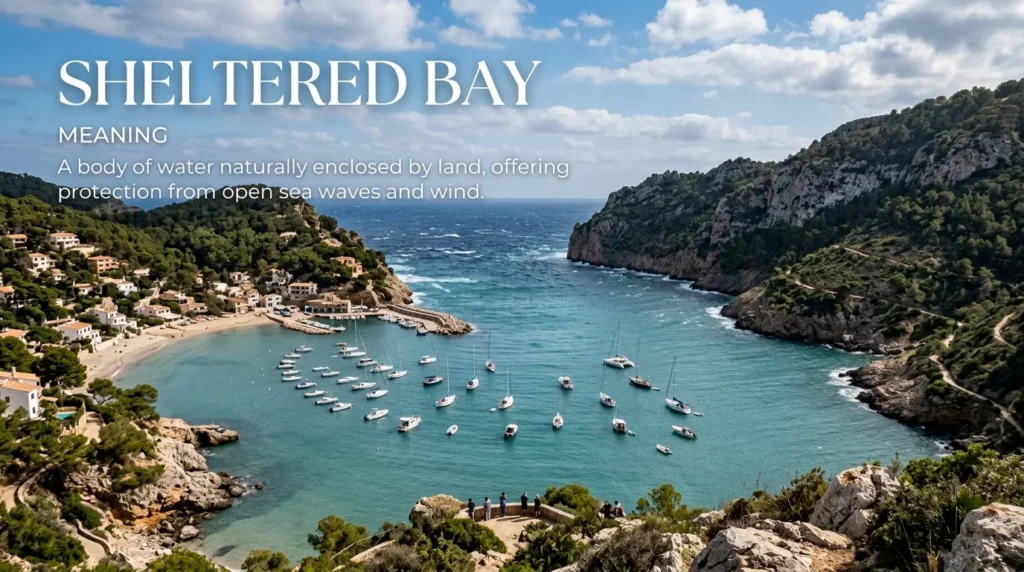
Definition in Simple Words
In simple English, a sheltered bay is a coastal area where the water is protected from strong waves and winds.
You can think of it as a natural safe area along the coast.
For example:
“The fishing boats stayed in the sheltered bay during the storm.”
This means the boats moved into a protected area where conditions were calmer than in the open sea.
Pronunciation
Sheltered bay
- Sheltered: /ˈʃɛltərd/
- Bay: /beɪ/
- Approximate pronunciation: “SHEL-terd BAY”
- Part of speech: noun phrase
Sheltered is an adjective, while bay is a noun.
Origin and Etymology
The word sheltered comes from shelter, meaning a place or condition that provides protection from danger, weather, or other harmful conditions.
The word shelter has roots in Middle English and Old French, ultimately connected with ideas of protection and cover.
Bay has a separate history and has been used in English for a coastal indentation or body of water partly enclosed by land for centuries.
Together, sheltered bay literally describes a bay that provides protection from exposed marine conditions.
Meaning in Different Contexts
Sheltered Bay in Geography
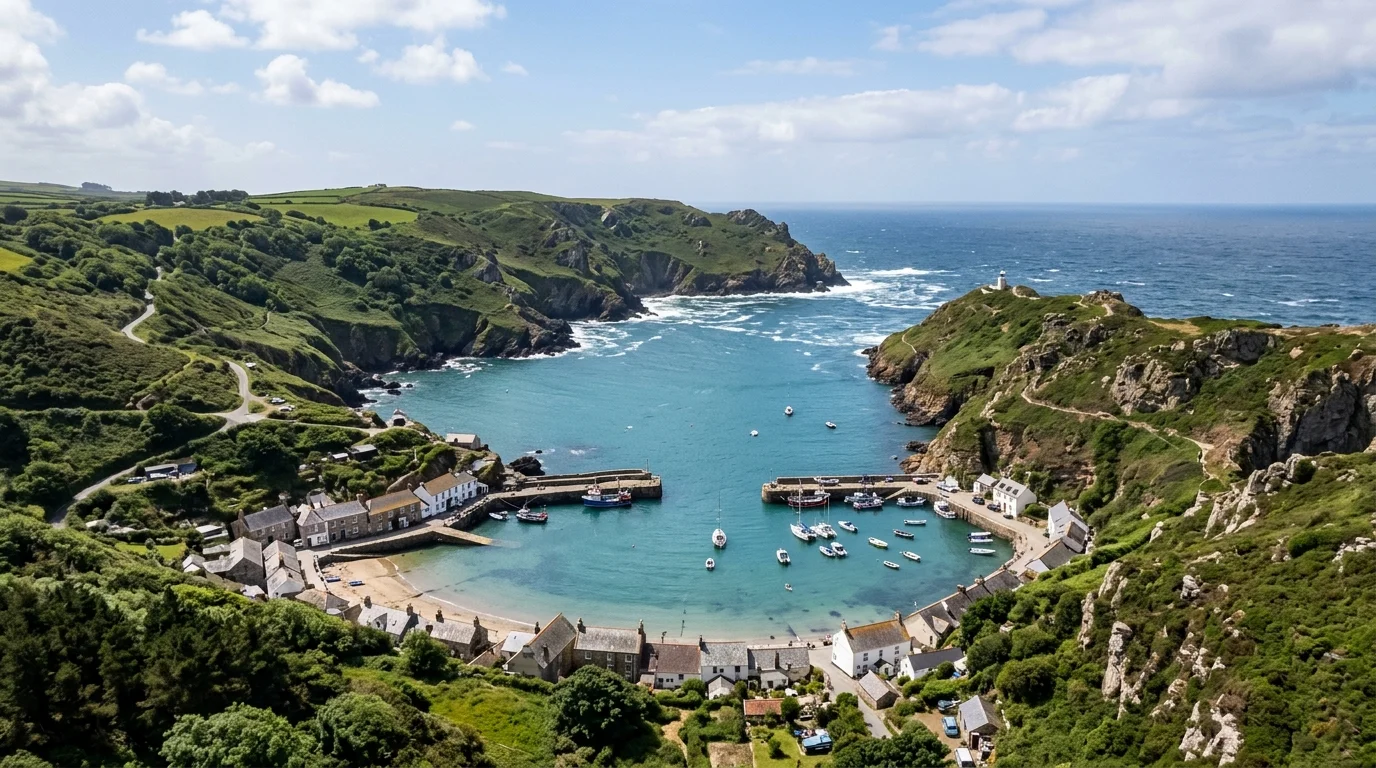
In geography, a sheltered bay is a coastal indentation where surrounding landforms reduce exposure to waves, wind, or open-sea conditions.
The degree of shelter depends on:
- The shape of the coastline
- The direction of prevailing winds
- Wave direction
- The size of the bay entrance
- Nearby islands or headlands
- Local currents
A bay can therefore be sheltered from one direction while remaining exposed from another.
Sheltered Bay in Boating
Sheltered bays are often valuable to boaters because they can provide calmer water.
Boats may use them for:
- Anchoring
- Waiting out rough weather
- Mooring
- Launching
- Loading and unloading
- Overnight stops
However, boaters still need to check local weather, tides, currents, and navigation conditions.
Sheltered Bay in Harbor Design
Many harbors are located in naturally sheltered coastal areas.
A sheltered bay can reduce the energy of waves entering a harbor, potentially making it easier to protect boats and infrastructure.
Some harbors also use artificial structures such as:
- Breakwaters
- Sea walls
- Piers
- Protective barriers
These structures can provide additional protection.
Sheltered Bay in Swimming
A sheltered bay may have calmer water than an exposed beach.
For this reason, some sheltered bays are popular with swimmers and recreational visitors.
However, sheltered does not mean risk-free. Strong currents, tides, sudden weather changes, underwater hazards, and boat traffic can still make swimming dangerous.
Sheltered Bay in Fishing
Sheltered bays can be useful fishing locations because their calmer waters may make access easier for small boats.
Some bays can also provide productive habitats for marine life, depending on local environmental conditions.
Sheltered Bay in Tourism
Tourism descriptions often use sheltered bay as a positive phrase.
For example:
“The hotel overlooks a beautiful sheltered bay.”
The phrase can suggest:
- Calm water
- Scenic surroundings
- Protection from waves
- Pleasant boating conditions
- A quieter coastal environment
The actual conditions still depend on the specific location and weather.
Sheltered Bay in Weather
A sheltered bay may experience less wave activity than an exposed coastline.
But the level of protection depends on wind direction and the physical geography of the area.
For example, a bay protected from waves coming from the west may become rough if strong winds and waves approach from the east.
Sheltered Bay vs. Open Bay
A sheltered bay is relatively protected from waves and winds.
An open or exposed bay has greater exposure to the sea and may experience larger waves or stronger marine conditions.
The distinction is relative rather than absolute.
Examples
- The boats anchored in the sheltered bay.
- The village was built beside a sheltered bay.
- The sheltered bay provided protection from strong waves.
- We found a quiet beach inside the sheltered bay.
- The harbor is located in a naturally sheltered bay.
- Sailors used the bay as a refuge during rough weather.
- The resort overlooks a beautiful sheltered bay.
- Small fishing boats gathered in the sheltered bay.
- The island creates a sheltered bay on its eastern side.
- The cliffs help protect the bay from strong winds.
- The sheltered bay had calmer water than the open coast.
- The marina was built inside a sheltered bay.
- Tourists enjoyed kayaking in the sheltered bay.
- The narrow entrance helps keep the bay relatively protected.
- The boats moved into the sheltered bay before the storm.
- The sheltered bay is popular with recreational boaters.
- The coastal village depends on the protected bay for fishing.
- The bay provides a safe-looking anchorage during normal conditions.
- The island creates a naturally sheltered area of water.
- The sheltered bay attracts visitors because of its calm appearance.
Example Sentences
- The fishing boats returned to the sheltered bay before sunset.
- The sheltered bay offered protection from the strong offshore winds.
- We spent the afternoon kayaking in the sheltered bay.
- The harbor is located inside a naturally sheltered bay.
- The island creates a sheltered bay along the northern coast.
- The beach sits at the edge of a quiet, sheltered bay.
- Sailors used the sheltered bay as an anchorage.
- The sheltered bay was much calmer than the open sea.
- The town developed around a naturally sheltered bay.
- The cliffs help protect the bay from large waves.
- The hotel overlooks a beautiful sheltered bay.
- The boats remained in the sheltered bay during rough weather.
- The bay is relatively sheltered from prevailing winds.
- Visitors can enjoy calm-looking water inside the sheltered bay.
- The marina benefits from its location in a sheltered bay.
- The sheltered bay provides a convenient place for boats to anchor.
- The coastline forms a sheltered bay with a narrow entrance.
- The bay remains sheltered from waves approaching from the west.
- The sheltered bay is popular with small fishing vessels.
- The village has existed beside the sheltered bay for generations.
- The bay is sheltered by nearby islands.
- The sheltered water made the area suitable for a marina.
- The bay becomes less sheltered when winds change direction.
- The sailors checked the weather before entering the sheltered bay.
- The phrase “sheltered bay” describes a bay that is relatively protected from rough sea conditions.
Synonyms
There is no perfect synonym for sheltered bay, but several expressions have similar meanings.
Protected Bay
A bay that is protected from waves, wind, or open-sea conditions.
Protected Cove
A smaller coastal area that is relatively protected from the sea.
Sheltered Cove
A protected coastal indentation, usually smaller than a bay.
Calm Bay
An informal description emphasizing relatively calm water.
Safe Anchorage
A place where boats can anchor with relatively good protection from weather and waves.
Protected Harbor
A harbor that offers protection to vessels, often through natural or artificial features.
Antonyms
Exposed Bay
A bay that is relatively open to winds and waves.
Open Coast
A coastline directly exposed to the sea.
Rough Water
Water affected by strong winds, waves, or other conditions that make it less calm.
Unprotected Coast
A coastline without significant natural protection from the open sea.
Exposed Anchorage
An anchoring location with limited protection from wind and waves.
Similar or Commonly Confused Words
Sheltered Bay vs. Cove
Both can describe protected coastal water.
A cove is generally smaller and more enclosed, although the terms can overlap.
Sheltered Bay vs. Harbor
A bay is a natural geographical feature.
A harbor is an area of water used for protecting or accommodating vessels and may be natural, artificial, or both.
A sheltered bay can contain a harbor.
Sheltered Bay vs. Lagoon
A lagoon is generally a shallow body of water separated from a larger body of water by a barrier such as a sandbar, reef, or barrier island.
A sheltered bay is a coastal indentation protected by its surrounding geography.
Sheltered Bay vs. Marina
A marina is a facility where boats are moored and serviced.
A sheltered bay is a natural geographical feature.
A marina can be located inside a sheltered bay.
Sheltered vs. Calm
Sheltered means protected from exposure.
Calm describes the actual condition of the water or weather.
A sheltered bay can still become rough during unfavorable weather.
Common Mistakes
Thinking Sheltered Means Completely Safe
A sheltered bay can still experience strong winds, waves, currents, tides, or dangerous weather.
Assuming Every Bay Is Sheltered
Some bays are highly exposed to the open sea.
Thinking Sheltered Means No Waves
Sheltered bays can still have waves, particularly during storms or when winds enter the bay.
Confusing a Bay With a Harbor
A bay is a geographical feature. A harbor is an area designed or naturally suited for protecting vessels.
Assuming Shelter Is the Same in Every Weather Condition
A bay may be protected from one direction but exposed to another.
Thinking Sheltered Bays Are Always Small
Sheltered bays can vary greatly in size.
When and How to Use This Term
Sheltered bay is a standard descriptive phrase used in:
- Geography
- Marine science
- Boating
- Tourism
- Travel writing
- Coastal planning
- Navigation
- Environmental studies
- Real estate descriptions
It is neither slang nor highly technical.
You might see it in a travel description:
“The hotel is situated beside a sheltered bay.”
Or in a boating context:
“The vessel entered the sheltered bay to avoid the rougher offshore water.”
The phrase is especially useful when describing the degree of protection a coastal area provides from waves and wind.
Related Expressions
Sheltered Water
Water protected from strong waves or wind.
Protected Coast
A coastline with geographical features that reduce exposure to the sea.
Sheltered Anchorage
A location where boats can anchor with protection from prevailing conditions.
Natural Harbor
A naturally protected area suitable for vessels.
Safe Harbor
A protected place where vessels can seek refuge; it can also be used figuratively.
Coastal Inlet
A body of water extending into the land from the sea.
Headland
A piece of land projecting into the sea, often helping to protect nearby coastal water.
Breakwater
A structure designed to reduce wave energy and protect a harbor or coastal area.
Open Sea
The part of the sea away from the protection of coastal landforms.
Exposed Coastline
A coastline that receives relatively direct exposure to wind and waves.