
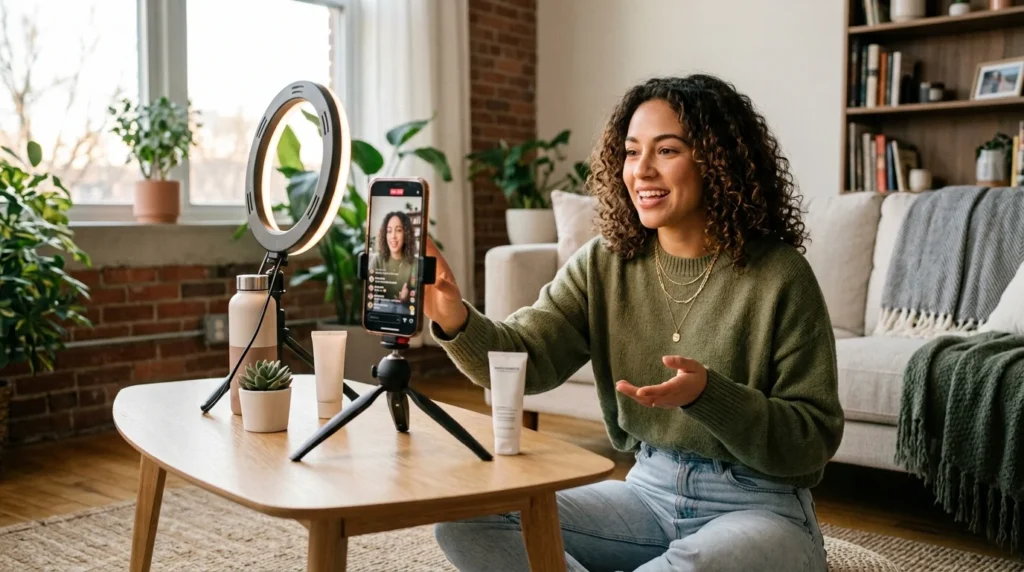
Definition in Simple Words
In simple English, a social media influencer is someone who has an audience online and can affect what that audience thinks, likes, discusses, or buys.
For example:
“She became a social media influencer by sharing makeup tutorials on Instagram.”
This means she built an online following around makeup content and became influential among her followers.
A simple definition is:
A social media influencer is a person who uses an online audience to influence people’s opinions, choices, interests, or behavior.
Pronunciation
Social media influencer
- Social: /ˈsoʊʃəl/
- Media: /ˈmiːdiə/
- Influencer: /ˈɪnfluənsər/
- Approximate pronunciation: “SOH-shul MEE-dee-uh IN-floo-en-ser”
- Part of speech: noun phrase
The word influencer comes from influence, meaning the ability to affect someone or something.
Origin and Etymology
The word influence comes from Latin influere, meaning “to flow into.” Over time, the word developed the broader meaning of having an effect on someone’s actions, thoughts, or behavior.
The modern term influencer existed before social media, but its meaning expanded significantly with the growth of blogs, online communities, video platforms, and social networking sites.
Today, social media influencer generally refers to a person who has developed an online audience and uses social platforms to communicate with that audience and potentially affect their decisions or behavior.
The rise of platforms such as Instagram, YouTube, TikTok, Facebook, and other social networks has made influencer marketing a major part of digital marketing.
Meaning in Different Contexts
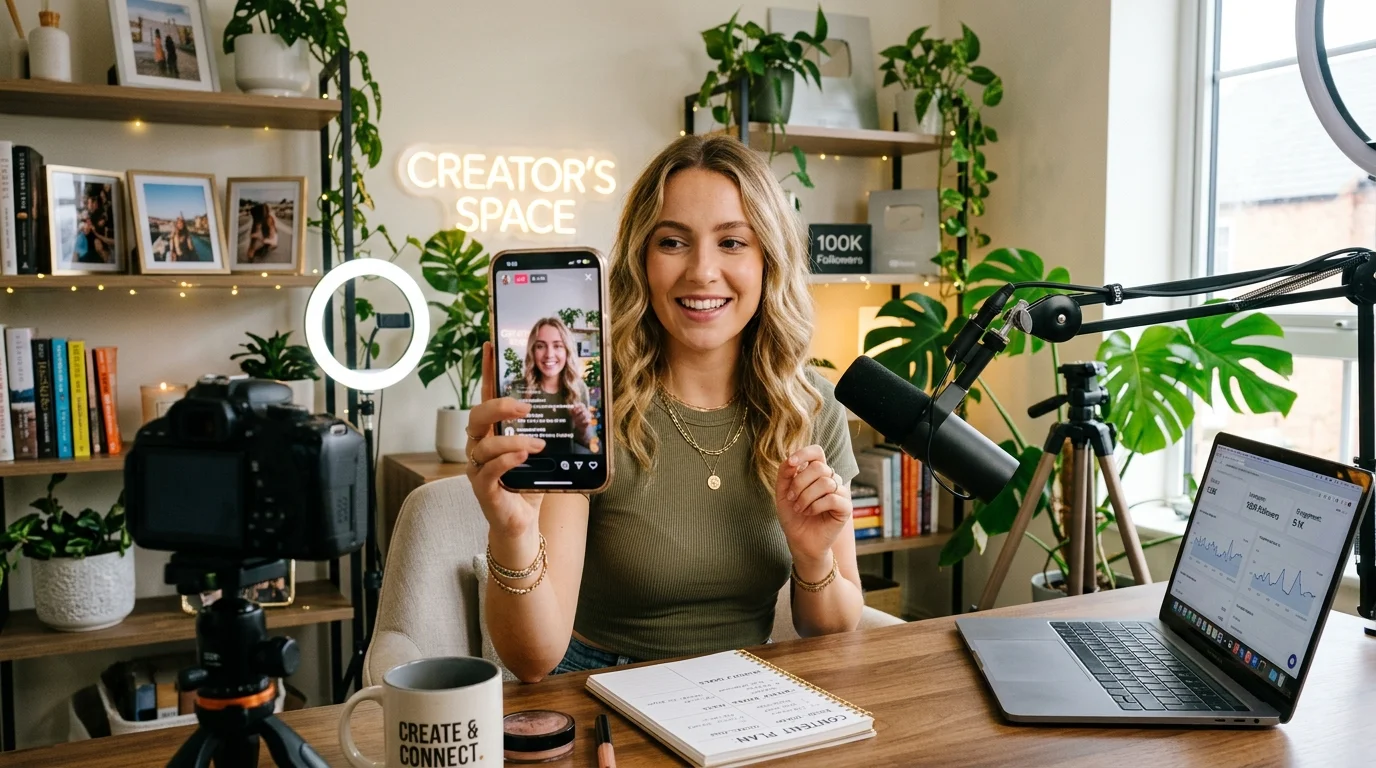
Social Media Influencer in Marketing
In marketing, an influencer is someone whose audience can be reached through their social media presence.
Brands may collaborate with influencers to promote:
- Products
- Services
- Apps
- Clothing
- Food
- Travel experiences
- Events
- Digital products
- Subscription services
Instead of communicating only through traditional advertising, brands can use an influencer’s existing relationship with their audience.
For example:
A skincare company may pay a beauty influencer to demonstrate one of its products in a video.
The effectiveness of an influencer campaign can depend on audience trust, relevance, engagement, content quality, and transparency.
Social Media Influencer on Instagram
Instagram influencers commonly create:
- Photos
- Reels
- Stories
- Product demonstrations
- Tutorials
- Reviews
- Lifestyle content
A fashion influencer might share outfits and clothing recommendations, while a travel influencer might publish destination guides and hotel reviews.
Social Media Influencer on YouTube
YouTube influencers often create longer-form content.
Examples include:
- Tutorials
- Reviews
- Vlogs
- Educational videos
- Interviews
- Gaming videos
- Product comparisons
- Commentary
YouTube can allow influencers to develop strong relationships with audiences because viewers may spend considerable time watching their content.
Social Media Influencer on TikTok
TikTok influencers often create short-form videos designed to entertain, educate, demonstrate, or participate in trends.
Content may include:
- Comedy
- Beauty
- Food
- Fitness
- Education
- Challenges
- Product demonstrations
- Reviews
- Commentary
TikTok can allow creators to reach people beyond their existing followers through recommendation systems and viral content.
Social Media Influencer in Business
Businesses may use influencers as part of their digital marketing strategies.
Influencer campaigns can help businesses:
- Increase awareness
- Reach niche audiences
- Generate engagement
- Introduce products
- Build social proof
- Drive website traffic
- Generate sales
The most appropriate influencer is not always the person with the largest audience.
A smaller creator with a highly relevant and engaged audience may be more valuable for a specific campaign.
Social Media Influencer in Everyday Language
In casual conversation, someone may be called an influencer simply because they have a large or noticeable social media presence.
The word can be used positively or negatively depending on the speaker.
For some people, an influencer is a trusted creator or expert.
For others, the term may suggest someone who primarily promotes products or follows online trends.
The meaning therefore depends partly on context.
Types of Social Media Influencers
Influencers can be categorized by audience size, content niche, platform, or level of expertise.
Nano Influencers
Nano influencers generally have very small but often highly engaged audiences.
They may focus on a specific community, local area, hobby, or niche.
Micro Influencers
Micro influencers typically have relatively small audiences compared with celebrities but may have strong engagement and specialized communities.
They are often attractive to brands targeting specific groups.
Macro Influencers
Macro influencers have larger audiences and may have significant visibility across one or more platforms.
They can provide broad reach but may have different engagement characteristics from smaller creators.
Mega Influencers
Mega influencers generally have enormous audiences and may include major celebrities or globally recognized creators.
Their primary advantage is large-scale reach.
Celebrity Influencers
Celebrities can influence audiences through their existing fame and social media presence.
Niche Influencers
Niche influencers focus heavily on a particular subject, such as photography, gaming, cooking, technology, or personal finance.
How Social Media Influencers Make Money
Influencers can earn income in several ways.
Common methods include:
- Sponsored posts
- Brand partnerships
- Affiliate marketing
- Advertising revenue
- Product sales
- Digital products
- Online courses
- Memberships
- Subscriptions
- Merchandise
- Paid appearances
- Consulting
- Creator programs
Income varies dramatically.
Having many followers does not automatically guarantee high earnings. Engagement, audience demographics, niche, platform, content quality, reputation, and commercial demand can all affect earning potential.
Examples
- A fashion creator recommends clothing brands to followers.
- A fitness creator demonstrates workout routines on Instagram.
- A technology creator reviews smartphones on YouTube.
- A food influencer shares restaurant recommendations.
- A travel creator publishes destination guides.
- A gaming influencer streams gameplay.
- A beauty creator demonstrates makeup techniques.
- A financial educator explains budgeting concepts online.
- A book influencer recommends novels to followers.
- A parenting creator shares family-friendly activities.
- A photographer teaches editing techniques through social media.
- A chef shares recipes through short videos.
- A comedian builds an audience through humorous posts.
- A fitness influencer collaborates with a sportswear company.
- A technology influencer tests a new gadget for a brand campaign.
- A travel influencer partners with a hotel.
- A beauty influencer uses affiliate links to recommend products.
- A creator sells merchandise to their online community.
- An educator creates educational videos for students.
- A lifestyle creator promotes products relevant to their audience.
Example Sentences
- She became a successful social media influencer through her travel videos.
- The brand partnered with a popular social media influencer.
- He works as a technology influencer on YouTube.
- Many social media influencers earn money through sponsored content.
- The influencer recommended the product to her followers.
- She built a loyal audience by posting useful fitness advice.
- A social media influencer can affect consumer purchasing decisions.
- The company hired several micro influencers for its campaign.
- He started his career as a small creator before becoming a major influencer.
- The influencer disclosed that the post was sponsored.
- Her followers trust her product recommendations.
- The company measured engagement from the influencer campaign.
- The influencer specializes in sustainable fashion.
- Many creators use affiliate marketing to generate income.
- The social media influencer gained attention after one of her videos went viral.
- He creates educational content rather than celebrity-focused content.
- The brand selected an influencer whose audience matched its target market.
- She has built a strong online community around cooking.
- The influencer regularly reviews new technology products.
- A large follower count does not always make someone an effective influencer.
- The creator’s audience is highly engaged with her content.
- The influencer published a sponsored video for the company.
- Social media influencers often work across multiple platforms.
- He became influential because his followers trusted his expertise.
- The campaign helped the brand reach a younger audience.
Synonyms
There is no perfect synonym for social media influencer, but several related expressions can be used depending on context.
Content Creator
A person who produces digital content. A creator does not necessarily influence purchasing decisions.
Online Personality
A person who has developed a recognizable identity or presence on the internet.
Digital Creator
A broad term for someone who creates online content.
Social Media Creator
Someone who creates content specifically for social media platforms.
Online Influencer
A broader term that can include influence beyond social media.
Brand Ambassador
A person who represents or promotes a company or brand, often through an ongoing relationship.
Opinion Leader
Someone whose opinions influence the views or decisions of others.
Antonyms
There is no exact antonym for social media influencer.
Depending on the context, contrasting terms might include:
Follower
Someone who primarily consumes or follows another person’s content rather than influencing an audience.
Audience Member
Someone who receives content without necessarily having influence over the wider audience.
Passive User
A social media user who primarily observes content rather than actively creating or influencing it.
Unknown User
A person without a significant public audience or recognizable online influence.
Similar or Commonly Confused Words
Social Media Influencer vs. Content Creator
A content creator produces digital content.
An influencer has the additional characteristic of influencing an audience’s opinions, interests, or behavior.
A person can be both.
Influencer vs. Celebrity
A celebrity is usually famous through entertainment, sports, media, or another public profession.
An influencer can become famous primarily through social media.
Some people are both celebrities and influencers.
Influencer vs. Brand Ambassador
An influencer may work with many different brands.
A brand ambassador generally has a more formal or ongoing relationship with a particular brand.
Influencer vs. Blogger
A blogger primarily publishes written or other long-form content through a blog.
A social media influencer primarily builds an audience through social platforms.
Many people can be both bloggers and influencers.
Influencer vs. Affiliate
An influencer is a person with an audience and influence.
An affiliate is someone who earns a commission for generating sales or conversions through an affiliate program.
An influencer can also be an affiliate.
Influencer vs. Internet Personality
These terms overlap.
An internet personality is recognized for their online presence, while an influencer specifically emphasizes their ability to affect an audience.
Common Mistakes
Thinking Every Person With Followers Is an Influencer
Having followers does not automatically mean someone has meaningful influence.
Influence depends on factors such as trust, relevance, engagement, authority, and audience behavior.

Assuming More Followers Means More Influence
A creator with 10,000 highly engaged followers may sometimes be more influential within a niche than a creator with one million passive followers.
Thinking Influencers Only Promote Products
Many influencers primarily educate, entertain, review, inspire, or build communities.
Commercial partnerships are only one part of influencer activity.
Assuming Influencers Must Be Celebrities
Many influencers are ordinary individuals who built an audience through consistent content.
Confusing Reach With Influence
Reach describes how many people can potentially see content.
Influence describes the ability to affect opinions, decisions, or behavior.
They are related but different.
Ignoring Sponsored Content Disclosures
Influencer marketing often involves commercial relationships. Creators should follow applicable advertising and platform disclosure requirements when content is sponsored.
Assuming Influencer Income Is Guaranteed
Follower counts do not automatically translate into a fixed income.
Earnings can vary substantially depending on niche, engagement, platform, audience, and business relationships.
When and How to Use This Term
Social media influencer is a common modern term used in:
- Digital marketing
- Social media
- Advertising
- Business
- Journalism
- Entertainment
- Public relations
- Creator economy discussions
It is generally neutral in meaning, although the tone can be positive, negative, or humorous depending on context.
Use social media influencer when discussing a person whose social media presence gives them the ability to influence an audience.
For example:
“The company partnered with a social media influencer to promote its new product.”
For someone who simply produces online content without emphasizing influence, content creator may be more accurate.
Related Expressions
Influencer Marketing
A marketing strategy in which brands collaborate with influential creators or personalities to reach audiences.
Social Media Marketing
Marketing activities carried out through social media platforms.
Content Creator
A person who produces digital content.
Brand Partnership
A commercial collaboration between a creator and a company.
Sponsored Content
Content created or published as part of a paid or commercial relationship.
Affiliate Marketing
A system in which a person earns a commission for generating sales or other actions through tracked referrals.
Creator Economy
The broader economic ecosystem surrounding people who earn money by creating digital content, communities, products, or services.
Audience Engagement
The ways people interact with content, such as likes, comments, shares, saves, views, and messages.
Social Proof
The tendency to view something as credible or desirable partly because other people appear to approve of it.