
Definition in Simple Words
In simple English, walking pattern means the way a person normally walks.
It describes things such as:
- How quickly someone walks
- How far apart they place their feet
- How long their steps are
- How they move their legs
- How they maintain balance
- How smoothly they move
For example:
“Her walking pattern changed after the injury.”
This means the way she walked became different after she was injured.
A simple definition is:
Walking pattern is the characteristic way a person moves their body while walking.
Pronunciation
Walking pattern
- Walking: /ˈwɔːkɪŋ/
- Pattern: /ˈpætərn/
- Approximate pronunciation: “WAW-king PAT-ern”
- Part of speech: noun phrase
A closely related technical word is gait, pronounced:
- Gait: /ɡeɪt/
- Approximate pronunciation: “gate”
Origin and Etymology
The word walking comes from the verb walk, which has Old English and Germanic roots associated with moving on foot.
The word pattern entered English through French and ultimately has roots associated with a model, design, or example that can be followed or repeated.
Together, walking pattern literally describes a recurring or recognizable pattern of movement while walking.
The medical term gait has a different history. It comes through Middle English and is related to words meaning manner, way, or course of movement.
Today, gait is widely used in medicine, physical therapy, biomechanics, rehabilitation, and movement science.
Meaning in Different Contexts
Walking Pattern in Everyday Conversation
In everyday speech, walking pattern simply refers to how someone walks.
For example:
“I recognized him by his walking pattern.”
This means the person’s distinctive way of walking helped identify them.
People may notice differences in:
- Speed
- Posture
- Stride
- Rhythm
- Foot placement
without using technical medical terminology.
Walking Pattern in Medicine
In medicine, a walking pattern is often described as a person’s gait.
Healthcare professionals may observe gait to assess movement, balance, coordination, strength, and mobility.
A change in gait can sometimes be associated with:
- Injury
- Pain
- Muscle weakness
- Joint problems
- Neurological conditions
- Balance difficulties
- Aging
- Medication effects
- Other health factors
A walking pattern by itself does not diagnose a medical condition. Professionals generally consider it alongside symptoms, medical history, physical examination, and other findings.
Walking Pattern in Physical Therapy
Physical therapists frequently assess walking patterns when helping people improve mobility.
They may look at:
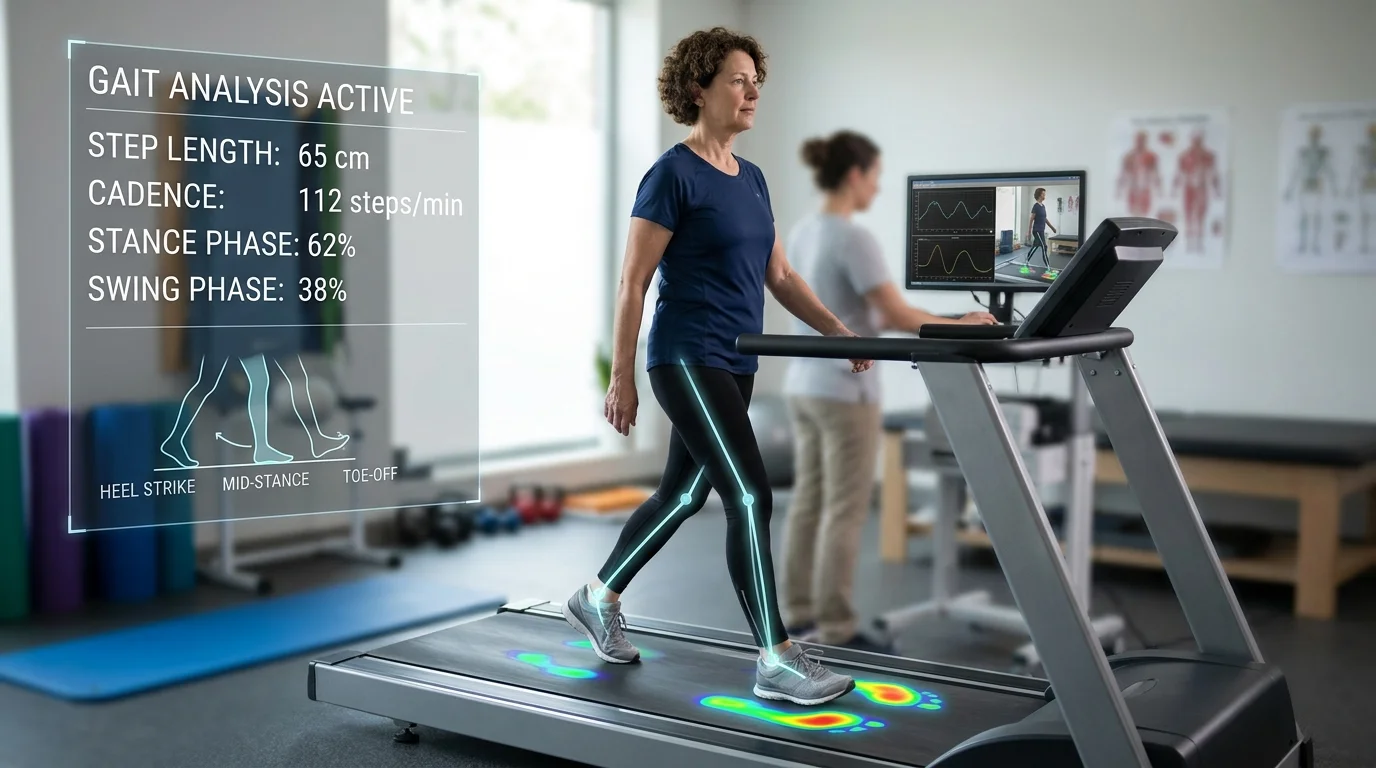
- Step length
- Stride length
- Walking speed
- Balance
- Foot placement
- Joint movement
- Weight distribution
- Coordination
- Use of assistive devices
The goal may be to improve safe and efficient movement.
Walking Pattern in Biomechanics
Biomechanics studies how forces and movement interact in living organisms.
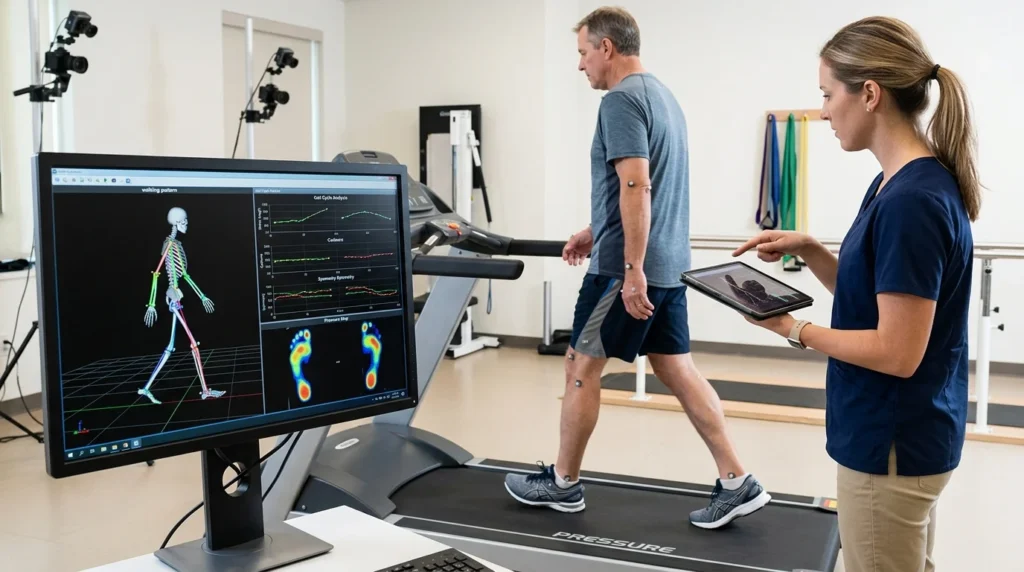
In this field, researchers can analyze walking patterns using:
- Motion-capture systems
- Force plates
- Pressure sensors
- Cameras
- Wearable sensors
- Computerized gait analysis
Researchers can measure precise features of walking and compare movement under different conditions.
Walking Pattern in Sports
Athletes may have walking and running patterns influenced by training, body structure, footwear, and previous injuries.
Walking analysis can sometimes help researchers understand movement efficiency or identify changes in mechanics.
However, walking and running are different movement patterns and should not automatically be evaluated in the same way.
Walking Pattern in Children
Children’s walking patterns develop as they grow.
Young children may initially have less mature balance and coordination than older children and adults. Their gait can change as their muscles, bones, nervous system, and motor skills develop.
A child’s walking pattern should therefore be interpreted according to their age and developmental stage.
Walking Pattern in Older Adults
Walking patterns can change with age.
Some older adults may experience changes in:
- Walking speed
- Step length
- Balance
- Stride
- Confidence
- Posture
However, significant or sudden changes in walking should not simply be assumed to be a normal part of aging. A healthcare professional can help determine the cause when a change is concerning.
Walking Pattern After an Injury
An injury can temporarily or permanently alter how someone walks.
For example, a person with a painful ankle may place less weight on that foot and change their stride.
This can create a compensatory walking pattern in which other parts of the body move differently to accommodate the injured area.
Walking Pattern and Posture
Walking involves more than the feet and legs.
Posture also influences movement.
A walking pattern can involve the position and movement of:
- Head
- Shoulders
- Spine
- Pelvis
- Hips
- Knees
- Ankles
- Feet
Efficient walking requires coordination among many parts of the body.
Walking Pattern and Balance
Balance is an important component of walking.
A person may change their walking pattern if they feel unstable.
For example, someone who feels unsteady may:
- Walk more slowly
- Take shorter steps
- Widen their stance
- Look down more often
- Use a support
Changes like these can have many possible explanations and should be interpreted in context.
Examples
- Her walking pattern changed after she injured her ankle.
- The therapist observed his walking pattern during the assessment.
- Everyone has a slightly different walking pattern.
- The child’s walking pattern changed as she grew older.
- The doctor noticed an unusual gait pattern.
- His walking pattern became slower after the injury.
- The physical therapist evaluated her walking pattern.
- Researchers studied the walking patterns of participants.
- His distinctive walking pattern made him easy to recognize.
- The person’s walking pattern appeared less stable than usual.
- The athlete’s walking pattern was analyzed using motion sensors.
- The patient reported that pain had changed his walking pattern.
- The therapist compared the person’s current gait with an earlier assessment.
- The study examined how footwear affected walking patterns.
- Her walking pattern became more symmetrical after rehabilitation.
- The doctor asked when the change in walking pattern began.
- The researcher recorded participants’ walking patterns.
- A person’s walking pattern can change with age.
- The walking pattern may be influenced by balance and muscle strength.
- The therapist recommended exercises to improve movement and stability.
Example Sentences
- Everyone has a unique walking pattern.
- The doctor noticed a change in his walking pattern.
- Her walking pattern became more comfortable after treatment.
- The therapist assessed his gait during the appointment.
- The injury affected the way she walked.
- His walking pattern changed because of pain in his knee.
- Researchers analyzed the walking patterns of several volunteers.
- The child’s walking pattern developed gradually.
- Her gait looked different after the operation.
- The physical therapist observed how he distributed his weight while walking.
- The walking pattern includes stride length, speed, balance, and coordination.
- His walking pattern was noticeably slower than before.
- The study examined differences in walking patterns between participants.
- The patient’s walking pattern improved during rehabilitation.
- A change in gait can have many possible causes.
- The athlete’s walking pattern was recorded using motion-capture equipment.
- Her walking pattern was affected by an old injury.
- The doctor asked whether the change had happened suddenly.
- The therapist examined the person’s posture and walking pattern.
- His distinctive walking pattern made him recognizable from a distance.
- Walking patterns can vary naturally from one person to another.
- The researcher measured stride length as part of the gait analysis.
- The person’s walking pattern appeared stable during the assessment.
- The therapist explained that walking involves coordinated movement throughout the body.
- The study investigated how different surfaces affected walking patterns.
Synonyms
There is no perfect synonym for walking pattern, but several related terms are commonly used.
Gait
The most important technical equivalent. Gait means a person’s manner or pattern of walking.
Gait Pattern
A more technical phrase commonly used in medicine, rehabilitation, and biomechanics.
Manner of Walking
A straightforward phrase meaning the way someone walks.
Walking Style
A more informal expression describing someone’s characteristic way of walking.
Locomotion Pattern
A technical expression referring to a pattern of movement from one place to another.
Movement Pattern
A broader term that can describe walking as well as other forms of movement.
Antonyms
There is no exact opposite of walking pattern because it is a neutral description rather than a quality with a direct opposite.
Related contrasting concepts include:
Immobility
The inability or reduced ability to move.
Stationary State
A condition in which a person or object remains still.
Irregular Movement
Movement that lacks a consistent or expected pattern.
Lack of Coordination
Difficulty coordinating body movements effectively.
Similar or Commonly Confused Words
Walking Pattern vs. Gait
These are very similar.
Walking pattern is an everyday phrase.
Gait is the more technical term used for the manner or pattern of walking.
For example:
“The doctor observed his gait.”
means essentially:
“The doctor observed the way he walked.”
Walking Pattern vs. Stride
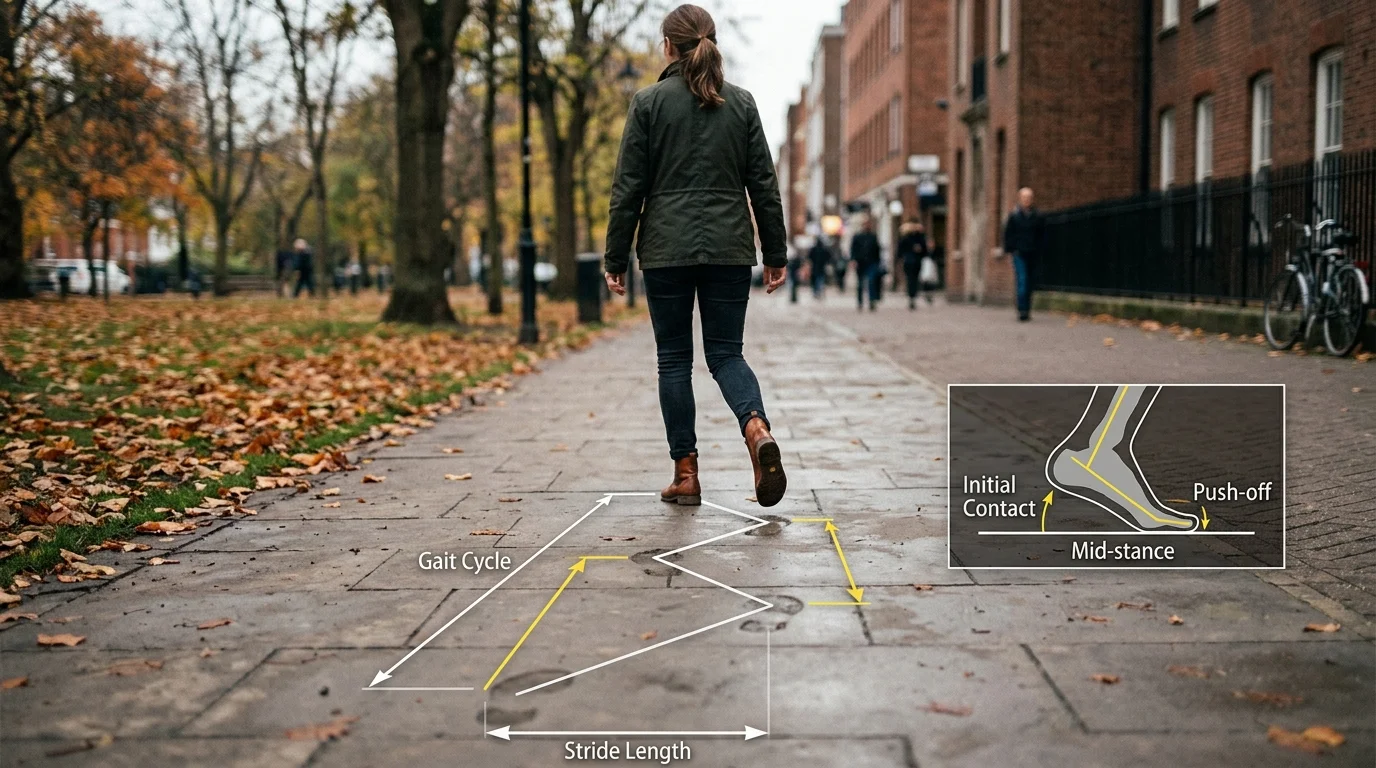
A stride is one complete cycle of walking movement, commonly measured from one foot’s contact with the ground to the next contact of that same foot.
A walking pattern includes much more than stride length.
Walking Pattern vs. Step
A step generally refers to movement from one foot to the other.
A person’s walking pattern includes the arrangement and characteristics of many steps.
Walking Pattern vs. Posture
Posture describes how the body is positioned.
Walking pattern describes how the body moves during walking.
Posture can influence gait, but the terms are not interchangeable.
Walking Pattern vs. Pace
Pace refers mainly to walking speed or rate.
Walking pattern includes pace as well as other features such as stride, balance, coordination, and foot placement.
Walking Pattern vs. Mobility
Mobility refers broadly to the ability to move.
A walking pattern describes how a person walks.
Common Mistakes
Assuming Everyone Has the Same Walking Pattern
Walking patterns naturally differ between people.
Height, body structure, habits, footwear, age, fitness, environment, and many other factors can influence walking.
Thinking an Unusual Walking Pattern Always Means Disease
An unusual gait can have many explanations and does not automatically indicate a medical condition.
Confusing Walking Pattern With Walking Speed
Speed is only one component of walking.
Two people can walk at the same speed while having very different gait patterns.
Assuming Gait and Stride Mean the Same Thing
Gait refers broadly to the manner or pattern of walking.
Stride is a specific measurement or cycle within walking.
Thinking Walking Pattern Only Involves the Feet
Walking involves coordinated movement of the entire body, including the legs, pelvis, trunk, and arms.
Assuming a Temporary Change Is Permanent
Walking can change temporarily because of fatigue, pain, footwear, an unfamiliar surface, or a recent injury.
Context matters when interpreting changes.
When and How to Use This Term
Walking pattern is a general phrase suitable for everyday and professional contexts.
It can be used in:
- Everyday conversation
- Medical writing
- Physical therapy
- Rehabilitation
- Biomechanics
- Sports science
- Child development
- Research
- Fitness discussions
In a medical or scientific context, gait or gait pattern is often more precise.
For example:
“The physician assessed the patient’s gait.”
In ordinary conversation:
“I noticed that his walking pattern had changed.”
Both sentences communicate essentially the same basic idea, but the first is more technical.
Related Expressions
Gait Analysis
The systematic assessment of how a person walks.
Gait Pattern
A technical term for the manner or pattern of walking.
Walking Speed
How quickly someone moves while walking.
Stride Length
The distance covered during one complete stride.
Step Length
The distance between corresponding points of successive foot contacts involving opposite feet.
Balance
The ability to maintain body stability while standing or moving.
Posture
The position and alignment of the body.
Walking Mechanics
The physical movements and forces involved in walking.
Abnormal Gait
A clinical description for a walking pattern that differs from what is considered typical in a particular context.
Gait Rehabilitation
Therapeutic work intended to improve walking ability or safety.